
Breastfeeding Memoirs: Third Time's a Charm
In honor of World Breastfeeding Week 2015, we are sharing inspirational stories from breastfeeding/working moms.
Today’s story was written by Lilly Penhall.
_____
Being a freelance contractor has its benefits to a work-at-home mom, that’s for sure. Flexible schedule, control over your workflow, and a certain sense of freedom comes with working for your own business instead of someone else’s. However, when it comes to maternity leave, freelancers don’t have the advantage of six weeks of paid leave that some employers offer. I returned to work two weeks after the birth of my daughter, who is now 18 months old, and started working only ten days after my son was born in June. To complicate matters, I was determined to breastfeed my babies.
In honor of World Breastfeeding Week 2015, we are sharing inspirational stories from breastfeeding/working moms.
Today’s story was written by Lilly Penhall.
_____
Being a freelance contractor has its benefits to a work-at-home mom, that’s for sure. Flexible schedule, control over your workflow, and a certain sense of freedom comes with working for your own business instead of someone else’s. However, when it comes to maternity leave, freelancers don’t have the advantage of six weeks of paid leave that some employers offer. I returned to work two weeks after the birth of my daughter, who is now 18 months old, and started working only ten days after my son was born in June. To complicate matters, I was determined to breastfeed my babies.

My first child, born over 10 years ago, was given formula in the hospital nursery (at the time I lived in a small Texas town where that was standard procedure) and only breastfed for about 6 days until we had such trouble latching that I, being young and uneducated about nutrition, decided to just continue to give her formula.
Many years and a cross-country move later, I started freelancing when I was six months pregnant with my second child, after having lost my sales job for lack of productivity. Sales wasn’t my field, but I was doing it because I needed to support myself; however, at that point my boyfriend and I were combining our finances and I was able to take some time to figure out what to do next. I had been volunteering my graphic design skills for years, but had not really tried to pursue it as a career, thinking my skills were not enough to make a living. Thankfully, having years of experience designing books for self-publication for family and friends, I started advertising myself as a book designer to fulfill that niche market. My business took off right away and I was able to start building a loyal clientele who loved my work and sent more clients my way.
After a full working day in labor at 41 weeks, we had a nearly tragic delivery and my daughter spent six hours in the NICU before I was able to see her, hold her and feed her. When I finally had her in my arms, she had the same troubles latching that her sister did—specifically, on my right breast. She was given a pacifier in the NICU, but whether that contributed to her breastfeeding issues is really hard to determine. I called the nurses at almost every feeding to help me latch her, but it was a frustrating routine that I continued at home, replete with many tears especially during the night when I was tired and couldn’t get her to latch.
I started pumping right away on the right side so that I could at least feed her breastmilk in the bottle. After two weeks, the (relatively) cheap single pump burned out and I was again struggling to get her to latch, which was more difficult now that she was used to the bottle. On top of that, a very demanding client who I had been put on hold when I went into labor, started calling daily and asking when I was going to finish her project. As much as I wasn’t ready to start working, I was guilt-tripped into it and started spending four or more hours a day on my client’s project which limited my ability to breastfeed even further.
At my child’s one month WIC appointment, I expressed my concern to my caseworker and was met with a blank stare and the reply, “You don’t think breastfeeding is easy? I think it’s easier than making a bottle.” She did not offer lactation consultant services or any help at all. My frustration turned inward into anger and depression because I felt incapable of providing nourishment to my baby that was supposedly so easy. I blamed my sagging breasts with nipples that pointed at my toes. I blamed my baby’s severe reflux that caused her to spit up half of what I fed her, leaving her still hungry and crying when I didn’t have any milk left.
I blamed the pediatrician we saw at her two week appointment because he misdiagnosed her thrush as “just dried milk” and it got so severe in her that her entire mouth was white and her skin broke out in rashes, while I had a full-blown candida overgrowth throughout my whole body that left me drained and deeply depressed, as well as an intense burning pain when my milk let down. I blamed my demanding client for taking up all my time, and further blamed myself for taking on the job when I should have been dedicated to my baby. I blamed myself for drinking too much on my birthday when she was one month old—a night when I really needed a break—and bought a can of formula to feed her, thinking my breastmilk was toxic.
Finally, I made an appointment with the lactation consultants at WIC and went in for some help, but by then it was almost too late. I was only producing a small amount of milk and my baby was constantly hungry. Still determined to breastfeed, I had clients write letters to WIC saying that I was working full-time so that they could supply me with a Medela double pump at no cost. When I finally got the pump at six weeks postpartum, even pumping every hour for days didn’t produce more than 2-3 oz of milk over the entire day, plus dry pumping was very painful. As hard as I tried, with all the tears I cried and all my efforts, I couldn’t continue breastfeeding my baby any longer. I remember when I put her to by breast for the last time, at six weeks old, and feeling the strangeness of her trying to drink from me when I was completely dried up. I felt useless and rejected by my own child, but I had to surrender to reality. If I couldn’t breastfeed, at least I would get her the best organic baby formula on the market.
Even with all the trouble I had with my girls, I knew I would try again with my next baby, and this time I would have more tools, more knowledge and more patience. I got pregnant again when my daughter was 7 months old, and we decided to be surprised as to the gender of our new arrival. I continued working from home and taking care of my baby at the same time until she was one year old, when I was offered a really well paying work-from-home job that would require more of my time. We put our toddler in daycare so that I could work full-time for my new employer, a university that needed web design work on a contractual basis.
I was working 40+ hours per week until I went into labor, at first from home, then I spent two months working at the university before I went back to working from home as my due date got closer. This time my baby decided to show up unexpectedly 2 weeks early and I was right in the middle of a project. I emailed my bosses from the hospital and told them I was having my baby and I would be back to work in a few weeks. This time, the delivery went more smoothly and my son was placed on my chest directly after birth, as nature intended. He latched right away on both sides and I can’t even express my relief and satisfaction at how easy it has been for him to breastfeed. It’s the experience I always wanted, but never had. Even the clogged duct I got the first week when I was severely engorged didn’t stop us from breastfeeding; in fact, the colostrum-rich milk I pumped during that time was fed to my older child who had a cold when her brother was born (and it was the last time she got sick—coincidence? Perhaps…)

Although I had intended to wait at least three weeks before returning to work, we had gotten behind on our bills during my transition from contractor to employee back to contractor, so after just one week I requested another project and returned to work part-time at 10 days postpartum. This time, however, I have been able to successfully breastfeed my baby while working because of some things I did differently.
We established a good breastfeeding routine before I returned to work, and we didn’t introduce a pacifier or bottle until he was over one month old. I have been able to pump easily with the Medela and my nifty homemade pumping bra (an old bra with holes cut in the nipples to stick the pump shields through—works like a charm!). I have spent entire days not working when the baby has been more demanding, instead of sacrificing my time with my baby for a demanding client. My son is so easy to feed that sometimes I can hold him and feed him with one hand while working with the other, and when he’s milk drunk I put him in a wrap or carrier and wear him while I work.
I also put a lot less pressure on myself this time—pressure to work AND pressure to breastfeed. I have a more “que sera sera” attitude about it now, and instead of stressing over working while breastfeeding, I relax in knowing that any amount of time I am able to breastfeed my son is awesome and feel blessed that I am able to support my family on a part-time income for now. My boyfriend wants to put him in daycare already so I can work more hours, but he’s only six weeks old and I want to spend as much time with him as I can. I’m increasing my working hours this week, and some time in the next few months I might return to full-time work on-site, but I’m in no hurry.
Breastfeeding while working has not been an easy journey, but I realize that I have many advantages that others don’t. I feel for moms who have to return to work outside the home after maternity leave and all the struggles that brings: pumping in smelly bathrooms or uncomfortable closets for the sake of “decency,” eight hours of engorgement followed by two hours of traffic, bosses and/or coworkers who don’t understand why you get to take so many breaks as if it’s some sort of mommy privilege instead of your other full-time job, etc. I am so grateful for finally having the positive breastfeeding experience I dreamed of, while still able to work and support my family. My goal is six months of breastfeeding, which is much longer than I have been able to do in the past, and I really hope to make it over one year for my baby’s sake. And if I am blessed with one more child, I will breastfeed again for as long as I can, because I know it’s what’s best for all of us.
Top 6 Tips for Protecting Your Milk Supply While Traveling for Work
We had this terrific question posted on our Facebook page:
“Dear Robin,
I leave tomorrow for a four day work trip and I can't take my baby with me. She has 6 feedings a day (one of those at night) so I'll be doing a good amount of pumping while I'm gone. Do you have any tips, specifically for pumping at airports and/or on planes? I'll be on a red eye there and a direct flight on the way back.”
Absolutely! Just because you have to travel for work doesn’t mean that you can’t protect your milk supply while you are gone.
_____
Here are my top 6 tips for protecting your milk supply while traveling for work
We had this terrific question posted on our Facebook page:
“Dear Robin,
I leave tomorrow for a four day work trip and I can't take my baby with me. She has 6 feedings a day (one of those at night) so I'll be doing a good amount of pumping while I'm gone. Do you have any tips, specifically for pumping at airports and/or on planes? I'll be on a red eye there and a direct flight on the way back.”
Absolutely! Just because you have to travel for work doesn’t mean that you can’t protect your milk supply while you are gone.
_____
Here are my top 6 tips for protecting your milk supply while traveling for work


Freemie Collection Cups
- Pick up a few insulated cooler bags with a zipper, like this one from Trader Joe's, with several blue ice packs, from Rubbermaid, to bring with you in your check-on luggage. When traveling for more than a day or so, you may have a lot of pumped milk to bring home with you. Using insulated cooler bags with ice packs will allow you to bring all of that liquid gold home with you, without having to lug it through security.
- Call your hotel before you leave home to ask if there is a fridge in your room. If not, you can request one and that is where you will place all of your pumped milk while on the trip. Store your milk in breast milk storage bags so that you can fit a lot of them in the insulated cooler bags on the way home. Also bring a small cooler with ice packs to store pumped milk when you are away from your hotel room.
- Depending on the length of your flight, you could either skip the pumping session and just make sure to pump extra long when you arrive in at your destination. Or, you could bring a nursing cover, your pump pieces, and a battery pack and pump while on the flight. On the red eye, this should be easy, since it will be dark. On the daytime flight you might ask the flight attendants if you could sit in the back in one of their seats so that you have a bit more privacy. If you are going to pump on the flight, bring a small cooler with you with blue ice so you can save your pumped milk. You could also just pump right before you get on the plane and then completely forget about pumping while on the flight.
- Invest in some Freemie collection cups. These cups are amazing! You can pump with your shirt on and no one will know what you are doing! They are incredibly discreet and hold up to 8oz per cup. These are great for on the plane, in the cab, and in between meetings.
- Try to pump every few hours, and once at night if your baby is still breastfeeding in the middle of the night, to keep up your milk supply for when you get home. If your meetings are in a conference center or hotel, ask the concierge if there is an open room that you can use (NOT A BATHROOM) to have some privacy while pumping. Aim for pumping for about 15 minutes, which is about as long as it will take your co-workers to enjoy a coffee break.
- Do some research ahead of time to see if the airport you are spending time in has a Mother’s Room, Nursing Room, or Pumping Room. Download the Mamava app to find publicly placed Mamava Lactation Suite in United States airports.

Mamava Lactation Suite
Breastfeeding at 3-4 Months - It Can Look Very Different!
Written by Ashley Treadwell, IBCLC
Running two support groups every week, I get all sorts of questions from moms with concerns about their breastfeeding babies. One of the questions/concerns I hear the most often is this: “My baby is suddenly not feeding for nearly as long as they used to and they aren’t interested in feeding as often. They get fussy easily at the breast and pull off after just a few minutes. I’m concerned that they aren’t getting enough milk from me!” I can almost always predict the age of these babies - somewhere around 12-16 weeks. And here’s why.
Many moms know that babies feed frequently in the early weeks. They expect feedings around the clock that can last quite a while. What many moms don’t realize is that this *can* change dramatically around the 3-4 month mark. Babies who used to feed every 1 to 3 hours, for 30 minutes or more, babies who were always happy to breastfeed when offered - suddenly start refusing the breast at times, and when they do accept, may only feed for a few minutes before pulling off. This can be a frustrating time for moms as they are often concerned that the baby may not be getting enough and are worried about this significant change in baby’s feeding patterns. In this article, we’ll discuss why this happens, how to know if there is reason for concern, as well as how to manage this new behavior.
Written by Ashley Treadwell, IBCLC
Running two support groups every week, I get all sorts of questions from moms with concerns about their breastfeeding babies. One of the questions/concerns I hear the most often is this: “My baby is suddenly not feeding for nearly as long as they used to and they aren’t interested in feeding as often. They get fussy easily at the breast and pull off after just a few minutes. I’m concerned that they aren’t getting enough milk from me!” I can almost always predict the age of these babies - somewhere around 12-16 weeks. And here’s why.
Many moms know that babies feed frequently in the early weeks. They expect feedings around the clock that can last quite a while. What many moms don’t realize is that this *can* change dramatically around the 3-4 month mark. Babies who used to feed every 1 to 3 hours, for 30 minutes or more, babies who were always happy to breastfeed when offered - suddenly start refusing the breast at times, and when they do accept, may only feed for a few minutes before pulling off. This can be a frustrating time for moms as they are often concerned that the baby may not be getting enough and are worried about this significant change in baby’s feeding patterns. In this article, we’ll discuss why this happens, how to know if there is reason for concern, as well as how to manage this new behavior.
Why is this happening?
While it’s great to know that this behavior is normal, many moms want to know why their baby’s breastfeeding behavior has changed so much. Much of it has to do with developmental changes that occur as baby grows and matures. One reason the length of a baby’s feeding may shorten significantly is simply that baby is becoming more efficient at the breast - meaning she/he can get more milk out in less time. This can be hard for moms to believe, so visiting a support group where you can do a weighted feed to see how much baby is taking is a great way to confirm this! I can’t tell you how many moms come to my groups and are amazed at how much their baby can take in only 5-10 minutes. Another factor is baby is experiencing a huge developmental leap at this time... awareness of his/her surroundings is exploding. Suddenly, your baby will notice the plant in the corner, the dog chasing it’s tail, the freckles on mom’s nose! Everything is so new and exciting, babies are often too distracted to breastfeed. They may go hours between feedings, and when they do go to breast, they will often pop off frequently to look around and interact with their surroundings.
Should you be concerned?
If your baby has breastfed well up to this new stage, if weight gain has been within normal limits (4-7oz per week), and they are having the appropriate amount of wet and dirty diapers, you can rest assured that this is all normal behavior and your baby will not go hungry. It is very uncommon for a baby who has gained weight well to suddenly start to have difficulties. Yes, your baby may take in less during the day if they’re distracted by all that goes on around them, but they will make up for it in other ways. Baby may start to wake more at night, asking to feed, to make up for the milk he/she missed during the day. This is one of the reasons that we don’t recommend night weaning at this time - your baby might need those middle of the night feedings! But don’t worry, tired mama, this won’t go on forever.
The signs to look for that will tell you that all is fine are as follows:
Baby is having the appropriate number of wet and dirty diapers
Baby is meeting the age-appropriate milestones
Baby is gaining at least 4oz per week.
While you may not know what your baby’s weight gain looks like in between doctors’ appts, you can visit a weekly breastfeeding support group to monitor baby’s weight on a weekly or monthly basis and be sure that he/she is gaining appropriately.
What can you do?
Offer your baby the breast when he/she shows signs of wanting it, but don’t worry too much if he/she don’t take it, or doesn’t feed for as long as she/he used to.
A couple of times a day, try to feed your baby in a dark, quiet place with fewer distractions.
Consider purchasing a nursing necklace so that your baby has something to play with while breastfeeding. It will help keep your baby’s attention on you rather than the ceiling fan above your head.
Try nursing in a carrier, which provides a nice, quiet, distraction-less space on the go.
When your baby wakes at night, respond to him/her and breastfeed, as he/she may need these feedings now more than ever.
But mostly, relax! Enjoy the shorter feeding periods and longer stretches between them. Have fun with your baby as he/she explores his/her surroundings and learn about the world. Trust that your baby will let you know when he/she is really hungry and follow his/her lead!
Here are a few more resources about breastfeeding a 3-4 month old:
Help a Mama Out: Tips for Breastfeeding the Distracted Baby
I've Had My Baby - Now What? Breastfeeding During Months 2-6

Breastfeeding... It has to get easier, right???
When I started working with Galit 10 1/2 months ago, I knew immediately that she would be one of the most dedicated, hard-working, and comedic mothers I would ever encounter. Her breastfeeding journey has been wrought with painful nipples, engorged breasts, and twins who had difficulties transferring milk. It has also been blessed with sweet moments of tandem nursing, gaining an abundance of milk, and confidence to overcome any challenge that lay in her path. Happy 1st birthday to your adorable boys, Galit, and happy 1st nursiversary to you! You continually inspire me!
Here is Galit’s story, in her own words!
_____
I had twins at 37 weeks 3 days who were 5.5 and almost 6 lbs (FRIGGING AMAZING) after preterm labor at 23 weeks and 4 months of bed rest! I wanted nothing more than to provide for them and ensure their health. Breastfeeding started out pretty rough. My colostrum was hard to obtain and milk took forever to come in. We were told to supplement with formula to keep them out of the NICU (they lost weight after birth, as all babies do), so we obliged. We went home with two healthy boys after 4 days and they were with me the entire time!
When I started working with Galit 10 1/2 months ago, I knew immediately that she would be one of the most dedicated, hard-working, and comedic mothers I would ever encounter. Her breastfeeding journey has been wrought with painful nipples, engorged breasts, and twins who had difficulties transferring milk. It has also been blessed with sweet moments of tandem nursing, gaining an abundance of milk, and confidence to overcome any challenge that lay in her path. Happy 1st birthday to your adorable boys, Galit, and happy 1st nursiversary to you! You continually inspire me!
Here is Galit’s story, in her own words!
_____
I had twins at 37 weeks 3 days who were 5.5 and almost 6 lbs (FRIGGING AMAZING) after preterm labor at 23 weeks and 4 months of bed rest! I wanted nothing more than to provide for them and ensure their health. Breastfeeding started out pretty rough. My colostrum was hard to obtain and milk took forever to come in. We were told to supplement with formula to keep them out of the NICU (they lost weight after birth, as all babies do), so we obliged. We went home with two healthy boys after 4 days and they were with me the entire time!
For several weeks, we used a gloved finger-straw-tube thing to help the boys practice sucking. Then, out of desperation and exhaustion, we switched to a bottle and for several months (yes, months), we had to pull their chins down to help them open their mouths wider and also tilt the bottle up and down to simulate the natural flow of breast milk. No one was really capable of helping my hubby and I because there was just too much to remember.
My schedule was: nurse one baby, nurse the other, supplement both with bottles with as much breast milk as I could pump, then another separate bottle with formula (we were told not to mix breast milk with formula. We tried several organic versions before finding one that worked for us), then pump. Between pumping 8+ times a day and nursing 10-12 times a day, I had between 10 and 25 minutes to eat OR to sleep at a time, around the clock, for almost two months. Ugh. I was always hungry and tired. If someone didn’t put food in front of my face, I didn’t eat. Great diet plan, aside from the feeling of extreme hunger, lack of energy, and need to consume extra calories to help my body make milk!
After a couple months of serious struggles with nursing, we were desperate. The boys both had extremely tight frenulums (tongue ties), hampering their sucking abilities and leaving them very inefficient (45 minute feeds to take in less than an ounce), and me in incredible pain due to their pinching. We were told to have them clipped to allow their tongues to work better (ouch, but not too bad). This didn’t do enough (the frenulums were posterior and thick), so several of our doctors recommended we have them lasered (under their tongues and under their upper lips). Holy hell, this sucked so hard! Then, worse, for a month and a half after the laser (until they healed), we had to stretch their wounds every time they ate. They cried. I cried. It was a very hard decision and experience, but we did what we thought would be best for our babies, for nursing, and for other reasons. So we resorted to these “drastic” measures. They eventually healed and can do all sorts of things with their tongues now! Oh the trouble they will get into some day.

When they were about a month old, I got mastitis. I thought I was dying. The pain, all over my body, was horrible. I cried all the way to the hospital (and I’m not a crier when it comes to physical pain) and got antibiotics. It took about four days before I felt okay enough to try breastfeeding again. I was in so much pain I couldn’t handle the babies biting/pinching, so I was only pumping. So much pumping. My parents (and in-laws) came to help care for the boys, as I couldn’t even hold them.
Then, thanks to the antibiotics, I think got thrush (a yeast infection in the nipples. I had never had a yeast infection before, thus I am conjecturing that antibiotics was the cause). I didn’t show any symptoms, aside from what I called “fire needle nipples.” The pain went all the way up to my armpits. This lasted for 3.5 months. AAACK! We had to sterilize everything, including pump parts, bottles, bras, and even my boobs(!) all the time. My attempt to destroy thrush was energy and time consuming, to put it simply. I continued to sterilize everything after each use until I stopped pumping (at over 9 months). I still change nipple pads several times a day. I’m so very thankful the boys never showed any signs of thrush, as I probably would have gone cuckoo!
I ended up getting mastitis again a few weeks later (OMG!). Thankfully, Robin came to my rescue with her “mastitis protocol.” I healed within 1.5 days, with NATURAL supplements, pumping, massage, heating pads, hot showers, etc. without antibiotics! YIPPEE! In total, I’ve had mastitis 10 times (WTH?), 5 of them pretty bad, leaving me mostly dysfunctional. Damn you, Plugged Ducts! I know how to deal with it now (phew!). I worked for months to restore my milk production to the level it was before infections and scar tissue hampered my supply. I still produce less on the left side, as compared to my right; however, I still made enough to feed both my boys!
In addition to dealing with mastitis and thrush, I had severe breast (and surrounding area) pain, for several weeks. I was mostly pumping and wasn’t nursing more than once or twice a day due to the intense discomfort (So. Many. Bottles.). I discovered I have vasospasms but, thanks to Robin’s protocol, the pain is now gone! Thank goodness for Robin. Phew! My daily supplements can fill an aisle at Sprouts, but at least they are all actually helping, homeopathic, and aimed at health rather than disease.

Big milestone: at about 3 months, I realized the boys were only being bottle supplemented with MY milk. I was finally producing enough to feed two growing boys and we were off formula! HOORAY! From 3 – 5 months, I was weighing the boys before and after each breastfeeding session to see how much they were taking in (as if I wasn’t doing enough already). We rented a scale from a local hospital to make sure the boys were eating enough. Then one day, at about 5 months, I looked at their thighs and BAM! I noticed they were chunky monkeys! We immediately returned the scale! SCORE!

At 8.5 months, we were meeting and overcoming new “opportunities for growth.” These “opportunities” have slowed greatly, but they still come. With 4 new teeth, one of my boys bit me. Hard. I instinctually yelped, so he cried. I soothed for 5 minutes and we tried again. He bit again. Hard. I yelped (no self control) and he cried harder, longer. 15 minutes later we tried again. Guess what happened? He bit. Again. I yelped (OMG control yourself, Mama!) and he was hysterical, hungry, and absolutely refusing to nurse, for 45 minutes. I gave him a little bottle of my pumped milk to calm him and his belly and put him down for a nap. I was sure he would never want to breastfeed again. Thank the heavens, as my hubby suspected, when he awoke, our baby had forgotten the morning ordeal and all was normal again. PHEW!

So, was all this craziness, horrible frustration, and extreme pain worth it? HECK YES!!! So far, my boys have always been healthy! In their whole first year, they’ve never even had a sniffle! Holy cows! I’ve had two colds and my hubby had three! Was it the breastfeeding? I’d like to think so. In addition to their health being friggin amazing, we get some great bonding time. I pet their heads, they give me smiles, hold each others’ hands, and sometimes giggle while nursing. They eat 3 solid food meals a day now, and I nurse them 5 times a day as well. The enzymes, antibodies, and good stuff my milk provides for them is so important. Breastfeeding is just the BEST and I’m SO grateful my body has provided.
We’re learning, growing, and laughing so much every day. We’ve hit the latest “golden age” of our babies and are enjoying each moment. It’s just amazing.

Do's and Don’ts of Using the Nipple Shield
Written by Robin Kaplan, M.Ed, IBCLC
Is your baby having a difficult time latching? Is breastfeeding incredibly painful? Do you have a cracked nipple that just won’t heal? Then most likely you have been recommended to try a nipple shield. While the nipple shield can often be a terrific temporary tool to help with these situations, it is important to know how to use them correctly, as well as have an exit strategy for how to discontinue usage as soon as possible.
Written by Robin Kaplan, M.Ed, IBCLC
Is your baby having a difficult time latching? Is breastfeeding incredibly painful? Do you have a cracked nipple that just won’t heal? Then most likely you have been recommended to try a nipple shield. While the nipple shield can often be a terrific temporary tool to help with these situations, it is important to know how to use them correctly, as well as have an exit strategy for how to discontinue usage as soon as possible.
What is a nipple shield and why is it used?
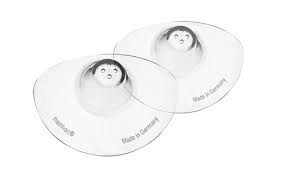
A nipple shield is a thin piece of silicone that is placed on your nipple so that your baby can feed at the breast. For the baby who cannot latch on easily (due to prematurity, difficult birth, tongue tie, etc) the nipple shield provides a definitive shape for mom’s nipple, making it easy to latch onto.....all baby has to do is open his/her mouth and start sucking. For the baby who is compressing mom’s nipples while breastfeeding (due to a tongue tie, lip tie, torticollis, receded chin, difficult birth, etc.) causing pain and cracked nipples, the nipple shield provides a temporary barrier so that the baby can still breastfeed while allowing mom’s nipples some relief and time to heal. Sometimes the nipple shield is offered to a mom just because she has flat nipples. In most cases, this isn’t really necessary, since a baby who latches on deeply doesn’t care whether mom has flat or erect nipples.
Is there a correct way to use the nipple shield?
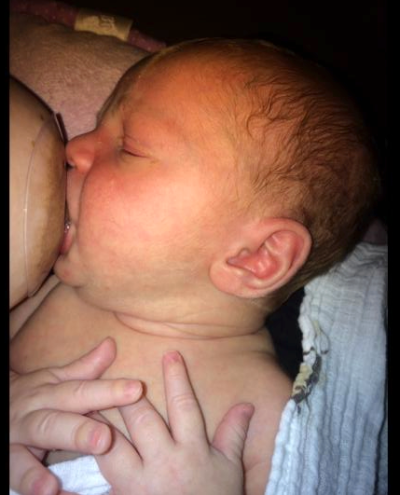
YES! Just as with the baby who latches on to the bare breast, when a baby is latched on with the nipple shield, he/she will only be able to stimulate mom’s milk, keep up her milk supply, and effectively transfer milk if he/she has the entire nipple shield in his/her mouth. If the baby is sliding off and on the nipple shield while feeding, the baby will not be able to transfer milk well and can also cause mom a lot of nipple pain.
Depending on how long your nipple is, you might have to invert the shield before putting it on, so that your nipple goes further into the shield before latching your baby. Our DIY Breastfeeding YouTube Video, Latching: Using a Nipple Shield, demonstrates how to do this.
What are the pros and cons of using the nipple shield?
Pros:
- Mom’s nipple has an opportunity to heal without having to introduce a bottle too early to her baby.
- Premature babies who have not yet become super coordinated at latching on to mom’s bare breast and who tire quickly are able to breastfeed more easily.
- Babies who are unable to latch onto mom’s bare breast, for a variety of reasons, are able to breastfeed while the underlying challenges are addressed.
Cons:
- Babies may not be able to effectively transfer milk using the nipple shield, so baby might need supplementation even if mom’s milk supply is able to meet his/her need.
- Mom’s milk supply could potentially decrease if baby isn’t effectively stimulating her milk supply.
- Mom might get recurrent plugged ducts and/pr mastitis due to ineffective milk drainage.
- Babies can become very dependent on the nipple shield, which can make it difficult to wean from. This can make breastfeeding in public a bit of a challenge.
How can I wean my baby from the nipple shield?
Babies can become very obsessed with the nipple shield, so sometimes it can be challenging to wean them from it. This is why you always want to have an exit strategy.
- If you are using the nipple shield as a temporary band-aid while your nipples heal, try to use it for only a few days and maybe not for every feeding. If one side is less damaged than the other, only use the shield on the more damaged nipple.
- If you are using the nipple shield to help with latching difficulties, attempt each day to latch your baby without it. You never know when he/she is going to figure out how to latch without it and the daily practice should help speed up that process. Sometimes moms find it helpful to latch the baby with the nipple shield at the beginning of the feeding and then try the ‘bait and switch’ move to encourage the baby to latch back on without it once he/she has a little milk in the belly.
- If you are using the nipple shield due to baby’s inability to breastfeed well because of a tongue tie, lip tie, general chompiness, torticollis, etc., you absolutely want to schedule an appointment with a lactation consultant to help remedy these underlying issues. The use of the nipple shield might help temporarily, but it may increase your risk for breastfeeding challenges later on, which can be more difficult to fix as the baby gets older. A great IBCLC should be able to assess what is causing these breastfeeding challenges, as well as provide you with other practitioners who can help remedy the situation, such as an ENT, pediatric dentist, chiropractor, craniosacral therapist, etc.
Breastfeeding After Breast Reduction - It IS Possible!
Written by Ashley Treadwell, IBCLC
Many women wonder if they will have a full supply after having a breast reduction. While the basic answer to this question is “we don’t know yet” - there are many factors, as well as things she can actively do, that can affect her ability to breastfeed successfully. In this article, we will discuss what those activities are and how a mom can maximize her supply when breastfeeding after a breast reduction. We will also look at what long-term supplementation can look like, if it is necessary.
It is important to remind you that breastfeeding does not have to be an “all or nothing” endeavor! We need to re-define what “success” means when it comes to breastfeeding after a breast reduction. Anytime a woman has a physiological factor that can affect milk supply, we always want her to understand that ANY amount of breastmilk is amazing. Whether she is able to provide 10% or 100% of what her baby needs, she is doing a fantastic job.
Written by Ashley Treadwell, IBCLC
Many women wonder if they will have a full supply after having a breast reduction. While the basic answer to this question is “we don’t know yet” - there are many factors, as well as things she can actively do, that can affect her ability to breastfeed successfully. In this article, we will discuss what those activities are and how a mom can maximize her supply when breastfeeding after a breast reduction. We will also look at what long-term supplementation can look like, if it is necessary.
It is important to remind you that breastfeeding does not have to be an “all or nothing” endeavor! We need to re-define what “success” means when it comes to breastfeeding after a breast reduction. Anytime a woman has a physiological factor that can affect milk supply, we always want her to understand that ANY amount of breastmilk is amazing. Whether she is able to provide 10% or 100% of what her baby needs, she is doing a fantastic job.
What Factors Will Affect My Ability to Breastfeed Exclusively?
An initial factor is how the surgery was performed. Fortunately, surgeons are currently performing breast reduction procedures in a manner that protects as much of the lactation function as possible - increasing a woman’s chance for breastfeeding later in life. If a large amount of breast tissue has been removed, or the ducts that deliver the milk to the nipple openings are severed, breastfeeding may be negatively affected. There are many different types of procedures and it isn’t always possible to tell which type was performed by simply noting the shape and placement of a woman’s scars. If you have had a breast reduction surgery and don’t know the specific type that was performed, the best way to gather this information is to contact the surgeon who performed the procedure. The most popular surgery performed in the United States is one that is also known to have the best implications for breastfeeding later in life. In this procedure, the areola isn’t completely removed and, therefore, connection between the nipple and breast tissue/ducts is partially protected. If the procedure involves removing the nipple completely and then surgically reattaching it, your chances of exclusively breastfeeding can be decreased.
Another factor that will affect your milk production is when the procedure was performed. The longer the time between the birth of your baby and the procedure, the better your chances will be to develop a full milk supply. Also, your milk supply is likely to increase with each subsequent birth - so if you are not able to exclusively breastfeed a first baby, there is still a good possibility you will be able to with a second or third child! These factors are each important because with both time and breast stimulation, breast tissue can actually re-grow and re-connect. This can be very encouraging for first-time moms to hear - that even if they are not able to provide their first baby with 100% of their breastmilk needs, all the hard work they are putting in is likely to pave the way for a larger milk supply with later children.
What Can I do to Maximize my Milk Supply - Before and After my Baby Arrives?
Something ALL moms can do to best prepare to breastfeed a baby (those who have had reduction procedures and those who haven’t!) is to educate themselves prior to the baby’s arrival. Take a breastfeeding class taught by an International Board Certified Lactation Consultant (IBCLC) and find out which resources are available in your area. Free support groups are a wonderful place to get help and support, as well as connect with other moms who are currently breastfeeding. We encourage women to attend our breastfeeding support groups while still pregnant - it’s a great way to familiarize yourself with breastfeeding women. A breastfeeding class will teach you what normal breastfeeding looks like in the first few weeks - this knowledge can help to reduce a lot of stress and anxiety.
Find an IBCLC who is knowledgeable about helping women breastfeeding after a breast reduction. Most offer prenatal consults that will specifically address what you can do to maximize your milk production, including different herbs available to help with supply. And even if you don’t meet with one prior to birthing your baby, she can be there as soon as baby arrives to help, if needed.
Once your baby arrives, the very best thing you can do is to breastfeed that baby constantly! The more stimulation your breasts receive in the early days, the better your milk supply will be. Babies feed frequently in the early days - knowing the signs that baby is getting enough are important. We have great information in a blog post about how to know baby is getting enough in the first week - I’ve Had My Baby, Now What? Breastfeeding During the First Week.
Some signs that baby isn’t getting enough are: baby not gaining weight after the 5th day of life, baby not having the recommended number of pee and poop diapers per day, or baby is well under birth-weight by 2 weeks of age. If you are experiencing any of these issues, it is important to seek out the help of an IBCLC.
If Long-Term Supplementation is Necessary - What are My Options?
It may be the case that some amount of supplementation is necessary for a woman breastfeeding after a reduction, especially for her first baby. If this is true - there are many options available. Whether mom has little to no supply, or close to a full supply, the best way to supplement a baby to establish a wonderful breastfeeding relationship is to feed the baby the additional milk at the breast. There are supplemental nursing systems (SNS) available that are made for this specific situation - an IBCLC can help a mom learn how to use this. If mom doesn’t want to supplement baby this way, but does want baby to have time at the breast, she can still feed the baby at the breast and then follow up with another feeding method - like a slow-flow bottle. If having baby at breast is important to mom, we do recommend that a bottle isn’t introduced until baby is latching well at the breast - some time after week 3. Prior to then, mom can supplement using a SNS, and then move to some combination of that and a bottle after the baby is 3-4 weeks of age. Supplementation can either be with mom's pumped milk, donor milk from another breastfeeding mother, or commercial formula. Here is our YouTube video showing one way a mom can supplement her baby at the breast: Supplementation: SNS at Breast
What Resources are Out There to Help Women Who Want to Breastfeed After a Breast Reduction?
Having support and help both before and after the birth of your baby is crucial and can have a lasting effect on your breastfeeding experience. We encourage all moms, whether they’ve had breast surgery or not, to look for breastfeeding support in their communities. Women who are breastfeeding after a breast surgery may need additional support and information specific to their unique situation. One of our favorite places for support is the website Breastfeeding After Breast and Nipple Procedures. Here you can find links to health care providers in your area who specialize in helping women post breast surgery, as well as a community of women who are in your same situation. Robin also interviewed Diana West for The Boob Group podcast episode: Breastfeeding After Breast Reduction Surgery.
Additional Resources:
Defining Your Own Success. Breastfeeding after Breast Reduction Surgery by Diana West.
Using YouTube to Help Achieve Comfortable Breastfeeding Positions
Written by Ashley Treadwell, IBCLC
In the beginning, breastfeeding can feel somewhat awkward and uncomfortable as new moms learn how to get their baby properly latched on. As an IBCLC, I see a lot of new moms breastfeeding their babies sitting straight up or hunched over, looking very uncomfortable. Heck, I did this as a new mom myself! I remember the constant aches in my neck and shoulders from sitting in contorted positions for long periods of time. Breastfeeding is something moms do very frequently in the early weeks and months - it should be comfortable.
Written by Ashley Treadwell, IBCLC
In the beginning, breastfeeding can feel somewhat awkward and uncomfortable as new moms learn how to get their baby properly latched on. As an IBCLC, I see a lot of new moms breastfeeding their babies sitting straight up or hunched over, looking very uncomfortable. Heck, I did this as a new mom myself! I remember the constant aches in my neck and shoulders from sitting in contorted positions for long periods of time. Breastfeeding is something moms do very frequently in the early weeks and months - it should be comfortable.
Out of all of the breastfeeding positions, there are two that happen to be our favorite - the side-lying and laid-back breastfeeding positions. We like these positions for so many reasons - the laid-back position often helps a baby achieve a deeper latch, and both positions are extremely comfortable for both mom and baby and promote lots of rest and relaxation. This is great for moms as their bodies need good rest to recover from delivery and is great for babies as the best milk transfer often happens during sleepy, calm times. Sometimes a mom may find that she is having a difficult time replicating these positions on her own - so we decided to provide a video demonstration! Here are two videos showing the laid back breastfeeding position and the side lying position. For mom breastfeeding videos, check out our YouTube channel: DIY Breastfeeding!
Breastfeeding Positions: Laid Back Breastfeeding
Breastfeeding Positions: Side Lying Breastfeeding
What is YOUR favorite breastfeeding position?
It's Here! Our DIY Breastfeeding YouTube Channel
Ever wish you could actually watch a mama breastfeed her baby in a laid-back position because you couldn't picture it in your mind from the blog article you just read? Wonder how you can tell if your pump flanges are fitting correctly? Well, look no further!
Today, we are beyond excited to annouce our newest baby, DIY Breastfeeding!
What is DIY Breastfeeding?
On our DIY Breastfeeding YouTube channel, you will find 2-3 minute instructional videos about different breastfeeding topics, ranging from positions to latching to pumping and more! Each video was recorded with one of our lactation consultants and some super cute local moms and babies.
Which topics will be included on DIY Breastfeeding?
A few months ago we started collecting video topics from all of you and your ideas were AWESOME! We are proud to say that today we are launching our channel with 10 stellar videos fitting into 5 different categories. Here are our current categories:
- Breastfeeding While Babywearing
- Latching
- Breastfeeding Position
- Pumping Strategies
- Breastfeeding Twins
Lastly, we would like to share a HUGE amount of gratitude to our DIY Breastfeeding partner, New Mommy Media! Without Sunny's awesome video shooting and editing expertise, these videos would look completely amateur and out of focus! Sunny, we adore you to pieces and we cannot wait to create more videos with you!
So head on over to DIY Breastfeeding! Let us know what you think about the videos and share your ideas for additional topics/categories you would like for us to include.
Which other topics/categories would you like to see included?
Podcast and Personal Stories about Tongue Ties and Lip Ties
Written by Robin Kaplan, M.Ed, IBCLC
Last week on The Boob Group, I had the esteemed pleasure of interviewing one of the most prominent experts on tongue ties and lip ties, Catherine Watson Genna. Catherine has written multiple articles and books about the mechanics of the tongue while breastfeeding, as well as the breastfeeding challenges that can occur when a baby has a tongue or lip tie. One of her earliest articles was written for the American Academy of Pediatrics, helping to bring awareness to this subject for the practitioners who babies see the most.
Written by Robin Kaplan, M.Ed, IBCLC
Last week on The Boob Group, I had the esteemed pleasure of interviewing one of the most prominent experts on tongue ties and lip ties, Catherine Watson Genna. Catherine has written multiple articles and books about the mechanics of the tongue while breastfeeding, as well as the breastfeeding challenges that can occur when a baby has a tongue or lip tie. One of her earliest articles was written for the American Academy of Pediatrics, helping to bring awareness to this subject for the practitioners who babies see the most.
Here is a list of SDBFC's articles about tongue ties and lip ties, including serveral personal memoirs from breastfeeding mothers who experienced this with their children.
Does Your Baby Have a Tongue or Lip Tie?
Advocating When Your Baby has a Tongue or Lip Tie
The Tongue Tie/Lip Tie Challenge
What a Difference a Tongue Tie Revision Can Make
Breastfeeding After a Tongue Tie Revision
If you have a story to share about breastfeeding a child with a tongue or lip tie, whether you have the revision procedure or not, please send it to Robin Kaplan (robinkaplan@sdbfc.com)
You Know You Are a Breastfeeding Mother of a Toddler When....
Jenn: You can have a conversation with him WHILE he has a mouth full of boob!
Julie: Your boob is visibly lopsided because it’s full and you’re at the park so your kids is too distracted to nurse.
Tiffany: Your nipples start reminding you of Stretch Armstrong.
Stacy: Your lap is full of toys and your toddler is dangling off the furniture while he eats. You have to tell your utensil-obsessed kiddo that spoons are for the table, not mommy’s milk. You laugh when people say that nursing a toddler is for YOUR benefits and not for the toddler. They have obviously never tried to get a toddler to nurse who didn’t want to, or stop one who does.
Lindsay: Your toddler offers her mommy milk to her teddy bear, dolls, toy animals, and daddy. It’s so nice she is willing to share!
Cat: They ask you to hold their cracker.
April: When he/she is hurt, the first words are, “Boob! Mommy! Boob!”
Julia: They announce, “That kid needs boo-boo” every time they hear a kid crying.
Laura: He’s dancing all over your chest, tummy, chair, the floor, the walls, the dog, WHILE nursing!
Colina: Nursing begins to feel more like a Cirque du Soleil performance.
Sarah: You see nothing wrong with sittin on the couch with your boobs hanging out for the quick ‘run by milking!’
Paula: After nursing you find gum on your nipple!
Laura: You are simultaneously a food source and a raceway for Matchbox cars.
Ariel: You get bras that are specifically padded to hide your nipples from twiddling hands.
Elisa: Your aren’t phased by nursing with a baby standing up!
Shannon: When you actually pray that he will sit and nurse longer than 4 minutes at a time so that you can rest for just a minute!
Cindy: You have to remind your kid to unlatch BEFORE walking away from you.... or jumping on the bed!
Ariel: When they know you’re touched out, so they ask for ‘just a little bit’ oh, so sweetly.
Kristin: They are constantly upside down.
Jamelle: Sometimes they just want to hug their boobies. They play ‘Tune in Tokyo” on whichever one is not being used.
Lisa: When you can’t make it from the dining room table to the shower without a nursing break.
Maryjane: When they put your boobs away after nursing! (I actually really appreciate this one!) When they tell YOU having milk (just a tiny little bit) will make them feel better.
Check out some of our fantastic articles about breastfeeding a toddler:
Toddler Nursing Part 1: How it Helped Me Manage My Circus
Toddler Nursing Part 2: Toddler vs. Breastfeeding
Toddler Nursing: Part 3: Super Breastfed Baby!
Check out some of our awesome podcasts about breastfeeding a toddler:
Breastfeeding Beyond Two Years
Breastfeeding Toddlers: Frequency, Biting, and Staying Motivated
Breastfeeding Toddlers: Night Nursing and Weaning
How would you finish the following sentence: You know you are a breastfeeding mom of a toddler when....