
Preparing for Breastfeeding Before Baby Arrives: What Can Actually Help?
May 24, 2026 • Author: Robin Kaplan, M.Ed, IBCLC, FNC
“Should I prepare for breastfeeding before my baby arrives?”
“Do I need a breastfeeding class?”
“What supplies do I actually need?”
“Should I meet with a lactation consultant during pregnancy?”
If you’ve been asking yourself these questions, you’re not alone. Many parents spend pregnancy preparing for birth and baby care, but feel less sure how to prepare for chest/breastfeeding and postpartum recovery. The good news? You do not need to have everything figured out before your baby arrives.
A few small steps during pregnancy can help you feel more informed, supported, and confident going into the postpartum period.

ABOUT SDBFC
The San Diego Breastfeeding Center was established in 2009 by Robin Kaplan, International Board Certified Lactation Consultant, Functional Nutritionist, and parent. Her vision was to create a judgment-free, inclusive support system for families navigating infant feeding challenges. SDBFC offers a wide range of one-on-one breastfeeding, infant feeding, and nutrition consultations - as well as classes, support groups, online articles, and social media - making it your one-stop-shop for all things infant feeding!
Learn What Real Breastfeeding Experiences Can Look Like
One of the most helpful ways to prepare for chest/breastfeeding is hearing honest stories from other parents.
Our Breastfeeding Expectations podcast series (on The Boob Group podcast) follows families through different stages of feeding and postpartum life. In the first episode, three new parents discuss:
Their labor and delivery experiences
How they prepared for chest/breastfeeding
Support they needed in the early days
How their partners helped postpartum
[Here’s the first episode in the 12-episode Breastfeeding Expectations series]
Every feeding journey looks different. Some babies latch easily. Others need more time and support. Some parents feel confident right away, while others need reassurance and troubleshooting along the way. Hearing a variety of experiences can help normalize the learning curve that often comes with feeding a newborn.
Establish Lactation Support Before Birth
Many parents wait until challenges arise postpartum before searching for help. Identifying support resources during pregnancy can reduce stress during those early weeks.
This may include:
Researching local IBCLCs
Establishing care with a lactation office prenatally
Understanding insurance coverage for lactation visits
Discussing feeding goals with your partner or support system
Identifying friends or family members who can help postpartum
If you are considered high-risk for premature birth or for potential lactation challenges, meeting with an IBCLC during the third trimester can be especially helpful. Prenatal consultations can help families better understand what to expect, create a feeding plan, and feel more prepared if additional support is needed after birth.
Many families feel reassured knowing support is already in place if feeding concerns arise after birth.
Prepare for Postpartum Recovery — Not Just Baby
Parents often spend months preparing for baby, but much less time preparing for their own recovery. The early postpartum period can be physically and emotionally demanding, and practical support can make a significant difference.
Helpful preparation may include:
Meal prepping freezer meals
Stocking easy one-handed snacks
Setting up hydration stations
Creating comfortable feeding/rest areas
Asking for help with laundry or household tasks
Arranging support with older children
Discussing realistic expectations around rest and recovery
Having support systems in place is often more helpful than purchasing every feeding product online.
Learn What’s Normal for Feeding in the Early Weeks
Understanding normal newborn feeding behavior can help reduce unnecessary stress and self-doubt. Many parents are surprised by how often newborns feed during the first few weeks.
Common newborn feeding behaviors include:
Feeding 8–12+ times in 24 hours
Cluster feeding, especially in the evenings
Frequent overnight waking
Wanting close physical contact and contact naps
Milk coming in around days 3–5 postpartum
Many parents worry they are “not making enough milk” simply because feeding feels very constant in the beginning. Understanding what is biologically normal can help ease some of that anxiety.
I’ve Have My Baby, Now What: Breastfeeding During the First Week
I’ve Have My Baby, Now What: Breastfeeding During the Second Week
I’ve Have My Baby, Now What: Breastfeeding During Weeks 3-6
Breastfeeding Positions Can Make a Difference
Many parents find it easier to learn feeding positions visually rather than by reading descriptions alone.
Our DIY Breastfeeding YouTube playlist demonstrates several commonly used newborn feeding positions, including:
Side-lying
Laid-back
Cross-cradle hold
Football hold
Tandem nursing
DIY Breastfeeding YouTube Playlist for Positioning
Small positioning adjustments can sometimes make feeding more comfortable for both parent and baby. If feeding feels painful, stressful, or overwhelming, reaching out for support can help identify whether positioning, latch, milk transfer, or another issue may be contributing.
Take a Prenatal Infant Feeding Class
Not all breastfeeding classes are created equal. Look for a class taught by an experienced lactation professional that covers not only latch and milk supply, but also realistic postpartum expectations and local support resources.
We also encourage parents to attend a chest/breastfeeding support group during pregnancy. Visiting a group before your baby arrives can help you:
Learn where the group meets and what to expect
See breastfeeding in real life, without the pressure to “perform”
Connect with parents who are in the newborn stage
Ask questions about postpartum recovery and feeding
Build confidence returning after your baby is born
Many parents find that attending a support group prenatally helps them feel more comfortable, connected, and supported before feeding challenges arise.
One of our favorite class evaluation comments was: “The teacher even made my husband wish he could breastfeed!” Now that’s a successful class.
Needing Support Is Common
One of the most important things we want parents to know is this: needing chest/breastfeeding support is very common. Many families benefit from support even when feeding is going relatively well. Sometimes small adjustments with positioning, latch, pumping, or feeding routines can make a big difference. Chest/breastfeeding is something both parent and baby learn together over time. Reaching out for support is not a sign that you are doing something wrong — it’s part of the learning process.
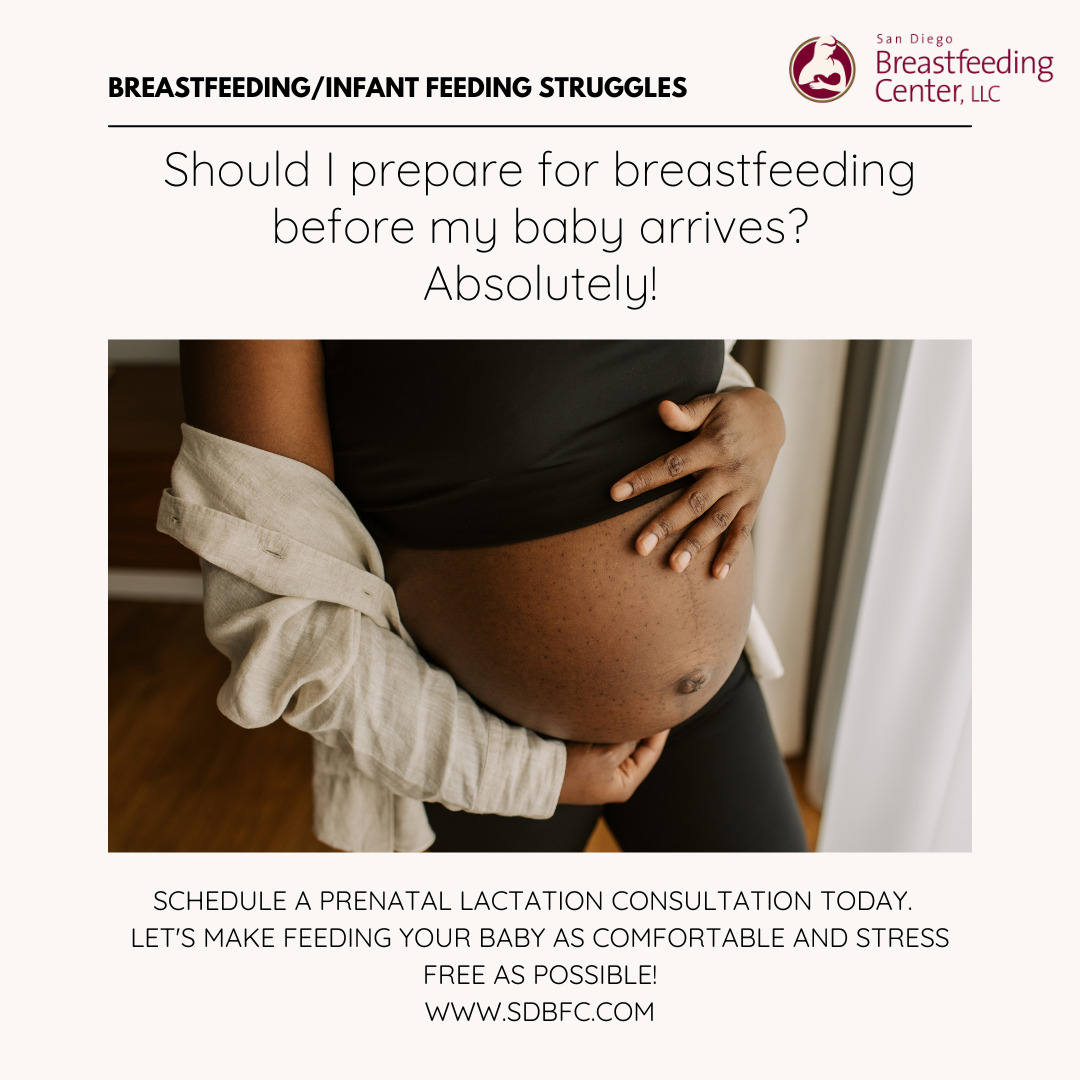
Preparing for chest/breastfeeding during pregnancy is not about planning for every possible scenario. It’s about building your support network, understanding what’s normal, and giving yourself space to learn along the way. Knowing where to turn for support — and hearing honest conversations about feeding and postpartum recovery — can help many parents feel more confident entering those early weeks with a new baby. If you would like support preparing for chest/breastfeeding before birth, our team at the San Diego Breastfeeding Center is here to help.
SDBFC is committed to providing high-quality lactation and functional nutrition consultations to parents in San Diego and beyond. Explore our postpartum, prenatal, and functional nutrition consultations, take a breastfeeding class or attend a workshop.
About the Author
Robin Kaplan has been an IBCLC since 2009, the same year that she opened up the San Diego Breastfeeding Center. Robin was the founding host of the Boob Group podcast and published her first book, Latch: a Handbook for Breastfeeding with Confidence at Every Stage in 2018. Melding her passions for supporting lactating parents and holistic health, Robin finished her Functional Nutrition Certification in 2023. In her free time, she enjoys hanging out with her two teenage boys, hiking, traveling, weaving, cooking, and searching for the best chai latte.


