Chest/Breastfeeding After a Cesarean Birth
Originally published on April 10, 2022, 2023; Revised March 18, 2026
Author: Robin Kaplan, M.Ed, IBCLC, FNC

Let me start off by saying: Having a cesarean is not a deal breaker for chest/breastfeeding. You can absolutely have a full milk supply after a cesarean birth! Whether your child is born by emergency cesarean or scheduled, there are a few things you can do to minimize this surgery’s impact on your chest/breastfeeding experience. Here are some ways to set you up for success.
ABOUT SDBFC
The San Diego Breastfeeding Center was established in 2009 by Robin Kaplan, International Board Certified Lactation Consultant, Functional Nutritionist, and parent. Her vision was to create a judgment-free, inclusive support system for families navigating infant feeding challenges.
SDBFC offers a wide range of one-on-one breastfeeding, infant feeding, and nutrition consultations - as well as classes, support groups, online articles, and social media - making it your one-stop-shop for all things infant feeding!
Frequent breast/chest stimulation
Newborn babies want to feed every 2-3 hours (and sometimes every hour during cluster feeding times). This is what helps bring in your milk supply as quickly and robustly as possible. This is especially important after a Cesarean birth, when there is a higher risk of a delay in milk ‘coming in.’ Rousing your sleepy baby to feed will help get in that important frequent stimulation to trigger prolactin - the milk supply hormone. And if your baby is having difficulties latching, consider pumping after breastfeeding attempts; this can help bring in your milk supply more quickly.
Be gentle to your abdomen
Having a cesarean is major abdominal surgery, so move slowly and try to rest as much as possible. Try chest/breastfeeding in the football hold so that your baby is not resting on your abdomen while feeding. Eventually you can move to a standard cradle or cross-cradle hold once your abdomen is less tender. If at all possible, have a support person help you get set up in a comfortable nursing spot and bring your baby to you, to minimize stress on your incision.
Lot of skin to skin
Who doesn’t love the thought of a yummy, squishy baby snuggling on their chest? Skin to skin calms your baby, regulates both of your nervous systems, regulates their oxygen levels and temperature, and gives them access to your chest/breast (i.e. food). It also increases your oxytocin (the amazing love hormone!) and helps bring in your milk supply. Win-win for everyone involved!
Help your body get rid of swelling
Some parents experience temporary swelling (edema) in their hands, feet, and chest/breasts after a cesarean. This is due to the fluids given during your surgery. Edema can cause a delay in your milk supply ‘coming in,’ as the excess fluid is competing with your milk in your chest/breasts. It can also cause your chest/breasts to feel engorged, making it more difficult for your newborn to latch on. Here are some ways to help your body process/reduce swelling:
Drink lots of water with lemon or cucumber
Keep your legs elevated, preferably above your hips
Drink a cup or two of dandelion tea/day (unless you are on anticoagulants) - this can be hot or iced
Avoid salty foods
Wear compression socks
Hand expression / pumping while in the hospital
Research studies show that hand expression after nursing (a few times a day during the first few days postpartum) brings in your milk supply more quickly, as well as increases future milk production. And if you are separated from your baby or having difficulties latching during those first few days, hand expression after pumping can help remove your colostrum more effectively. Check out this video which shows how to hand express colostrum.
Protect your gut and your nipples
Most likely you will be given antibiotics before or after cord clamping. Antibiotics kill off the bad bacteria AND good bacteria in your gut. So, you will want to start taking a high-quality probiotic to recolonize your gut with good bacteria for a few weeks. This will help your digestive system, as well as prevent a yeast infection or nipple thrush.
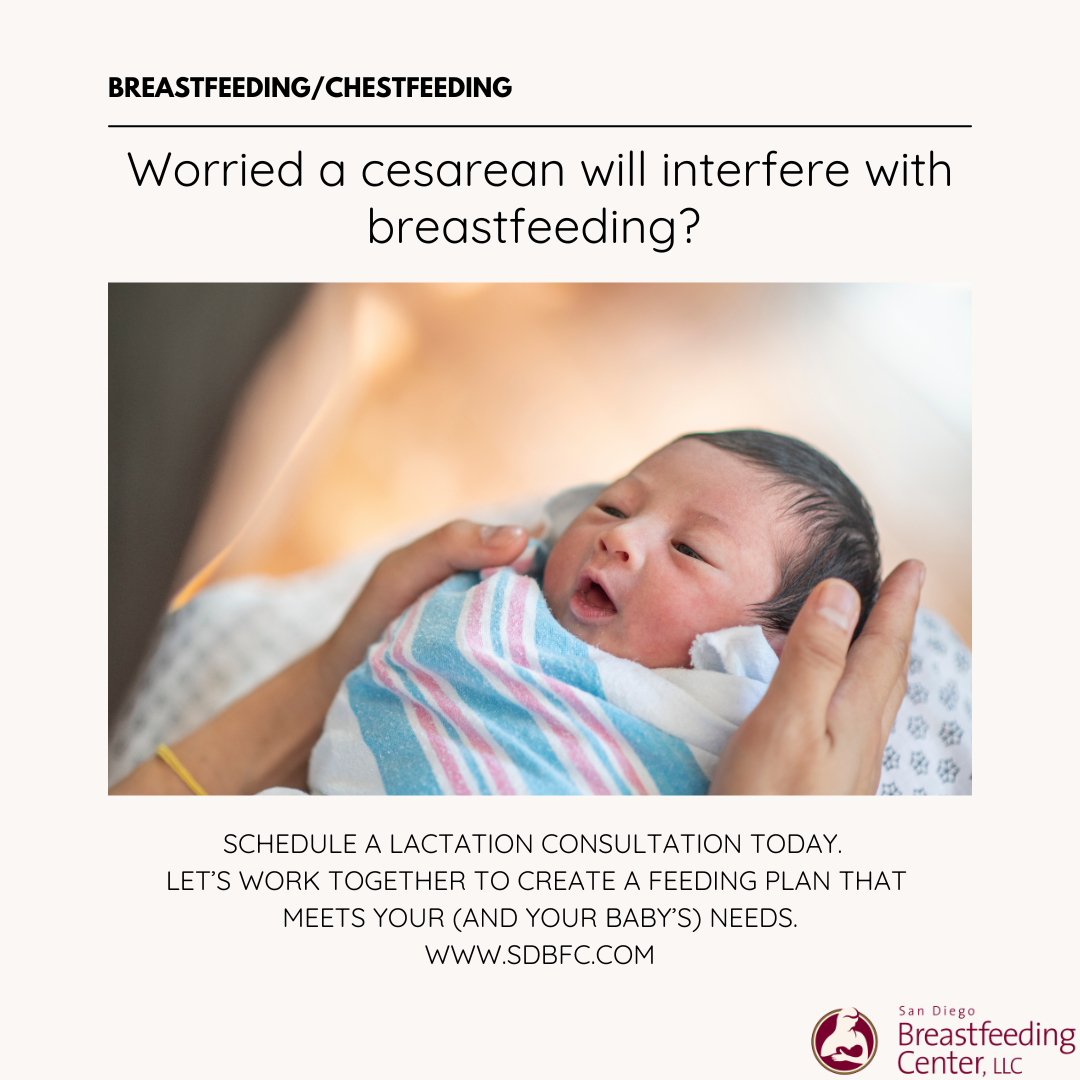
Recovering from a C-section? Schedule a consultation for guidance on milk supply, comfort, and positions.
Don’t let milk supply or feeding struggles cause stress for you or your baby! At each lactation appointment, our lactation consultants complete a full oral assessment, discuss feeding patterns, take a full history on your milk supply, and offer strategies for boosting your milk supply, if needed. Book a one-on-one lactation consultation today.
SDBFC is committed to providing high-quality lactation and functional nutrition consultations to parents in San Diego and beyond. Explore our postpartum, prenatal, and functional nutrition consultations, take a breastfeeding class or attend a workshop.
About the Author
Robin Kaplan has been an IBCLC since 2009, the same year that she opened up the San Diego Breastfeeding Center. Robin was the founding host of the Boob Group podcast and published her first book, Latch: a Handbook for Breastfeeding with Confidence at Every Stage in 2018. Melding her passions for supporting lactating parents and holistic health, Robin finished her Functional Nutrition Certification in 2023. In her free time, she enjoys hanging out with her two teenage boys, hiking, traveling, weaving, cooking, and searching for the best matcha latte.