Your Nutrition Matters, Too: Eating Well While Breastfeeding
One of the first questions nearly every new parent asks is, “Is my baby eating enough?”
We watch wet diapers, weight gain, and feeding cues because we want to know our babies are getting everything they need to grow and thrive. But there’s another question I wish more lactating parents would ask themselves:
Am I eating enough?
Aug 29, 2026 • Author: Robin Kaplan, M.Ed, IBCLC, FNC
One of the first questions nearly every new parent asks is, “Is my baby eating enough?”
We watch wet diapers, weight gain, and feeding cues because we want to know our babies are getting everything they need to grow and thrive. But there’s another question I wish more lactating parents would ask themselves:
Am I eating enough?
Between feeding your baby, recovering from birth, managing sleepless nights, and adjusting to life with a newborn, it’s incredibly easy for your own meals to become an afterthought. Maybe breakfast is coffee and a piece of toast, lunch happens at 3:00 p.m., or you realize at dinner that you’ve barely eaten all day.
If that sounds familiar, you’re not alone.
One of the most common nutrition concerns I see isn’t necessarily that breastfeeding parents are eating the “wrong” foods. It’s that many simply aren’t eating enough—or aren’t getting enough nutrient-rich foods to support everything their bodies are doing.

ABOUT SDBFC
The San Diego Breastfeeding Center was established in 2009 by Robin Kaplan, International Board Certified Lactation Consultant, Functional Nutritionist, and parent. Her vision was to create a judgment-free, inclusive support system for families navigating infant feeding challenges. SDBFC offers a wide range of one-on-one breastfeeding, infant feeding, and nutrition consultations - as well as classes, support groups, online articles, and social media - making it your one-stop-shop for all things infant feeding!
Why Eating Enough Matters While Breastfeeding
Producing milk requires a significant amount of energy. Lactating parents generally need 500-700 additional calories each day, although individual needs vary based on factors such as body size, activity level, and how often you’re breastfeeding or pumping.
That doesn’t mean you need to count calories. What matters more is making sure you’re consistently nourishing yourself throughout the day.
Your body uses nutrients from both the foods you eat and the nutrient stores you’ve built over time to make milk. Your body is remarkably good at prioritizing milk production, but that doesn’t mean you won’t feel the effects if you’re regularly skipping meals or not getting the nutrients you need.
Not eating enough can leave you feeling even more tired and depleted during a time when your body is also recovering from pregnancy and birth. Good nutrition supports your energy, recovery, mood, overall health, and the ongoing work of producing milk.
So rather than focusing on eating perfectly, I encourage lactating parents to think about one thing:
How can I get more nourishment into my day?
How Can I Nourish My Body Best While Breastfeeding/Lactating?
A good place to start is with nutrient-rich foods—foods that provide plenty of vitamins, minerals, protein, healthy fats, fiber, and other nutrients.
You don’t need a complicated meal plan. Instead, try to include a combination of protein, healthy fats, fiber-rich carbohydrates, and fruits or vegetables throughout your day.
Protein
Protein supports tissue repair, provides important amino acids for your baby’s growth, and can help keep you feeling satisfied and energized.
Good sources include:
Eggs
Greek yogurt and cottage cheese
Chicken and turkey
Salmon, tuna, and other fish
Lean beef
Beans and lentils
Tofu
Nuts and nut butters
Healthy Fats
Fat is an important source of energy during lactation, and certain fats—including omega-3 fatty acids—support your baby’s developing brain and nervous system.
Try foods such as:
Avocado
Olive oil
Nuts and seeds
Nut butters
Salmon and other fatty fish
Chia, flax, and hemp seeds
Fiber-Rich Carbohydrates
Carbohydrates are an important source of energy. Choosing carbohydrates that also contain fiber can provide more sustained energy, support digestive health, balance blood sugar, and help keep you satisfied.
Examples include:
Oatmeal
Whole-grain bread and pasta
Brown rice
Quinoa
Sweet potatoes
Beans
Fresh fruit
Aim for a Rainbow of Colors
One of the simplest ways to increase the variety of nutrients in your diet is to eat a variety of colorful fruits and vegetables.
Think berries, leafy greens, tomatoes, bell peppers, carrots, sweet potatoes, broccoli, citrus, and whatever produce you enjoy and will actually eat. Different colors provide different vitamins, minerals, and antioxidants, so instead of worrying about eating a specific “superfood,” aim for variety throughout the week.
And remember that frozen fruits and vegetables count, too. They’re nutritious, affordable, convenient, and often much easier to keep on hand during the postpartum period.
What Can This Look Like on a Real Day?
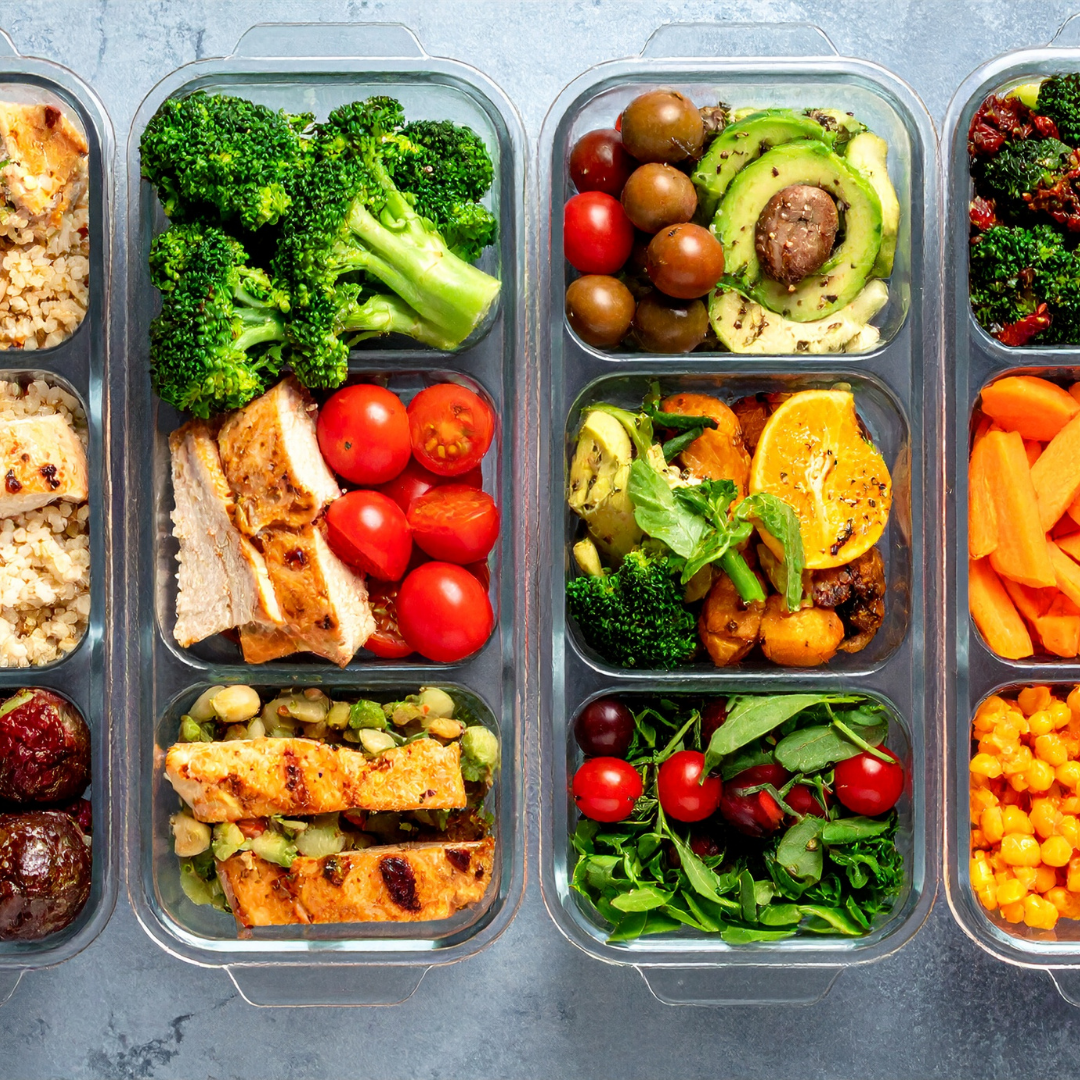
Healthy eating while breastfeeding/pumping doesn’t have to mean elaborate recipes or hours of meal prep.
Here are some simple ideas:
Breakfast
Eggs, whole-grain toast, avocado, and berries
Greek yogurt with berries, nuts, and granola
Overnight oats with chia seeds, fruit, and nut butter
Lunch
Turkey and avocado sandwich with vegetables and fruit
Chicken and quinoa bowl with roasted vegetables
Bean soup with whole-grain bread and a side salad
Dinner
Salmon with sweet potatoes and broccoli
Chicken with brown rice and colorful roasted vegetables
Turkey chili with beans, avocado, and your favorite toppings
Snacks
Apple with peanut butter
Greek yogurt or cottage cheese with fruit
Hummus and vegetables
Trail mix
Cheese and whole-grain crackers
These are examples, not rules. The goal is to find combinations that work for your tastes, budget, culture, and lifestyle.
Do You Still Need a Prenatal or Postnatal Vitamin?
For many lactating parents, continuing a high-quality prenatal or postnatal vitamin can help fill nutritional gaps during lactation.
Nutrients that are particularly important during this stage include vitamin D, iodine, B vitamins such as folate and B12, zinc, omega-3 fatty acids such as DHA, and iron when appropriate.
There’s much more to say about choosing the right prenatal or postnatal supplement, so we’ll save that for another blog. For now, remember that supplements are meant to supplement a nutrient-rich diet, not replace one.
Keep It Realistic
You don’t have to overhaul your diet to nourish yourself well.
Cook extra servings at dinner and eat the leftovers for lunch.
Keep frozen fruits and vegetables in the freezer.
Have easy protein options and snacks available so you can grab something when you’re hungry.
If a smoothie is easier than making breakfast some mornings, make the smoothie.
And if all you manage to eat is a sandwich while holding your baby, that counts, too. Small, consistent choices matter much more than trying to eat perfectly.
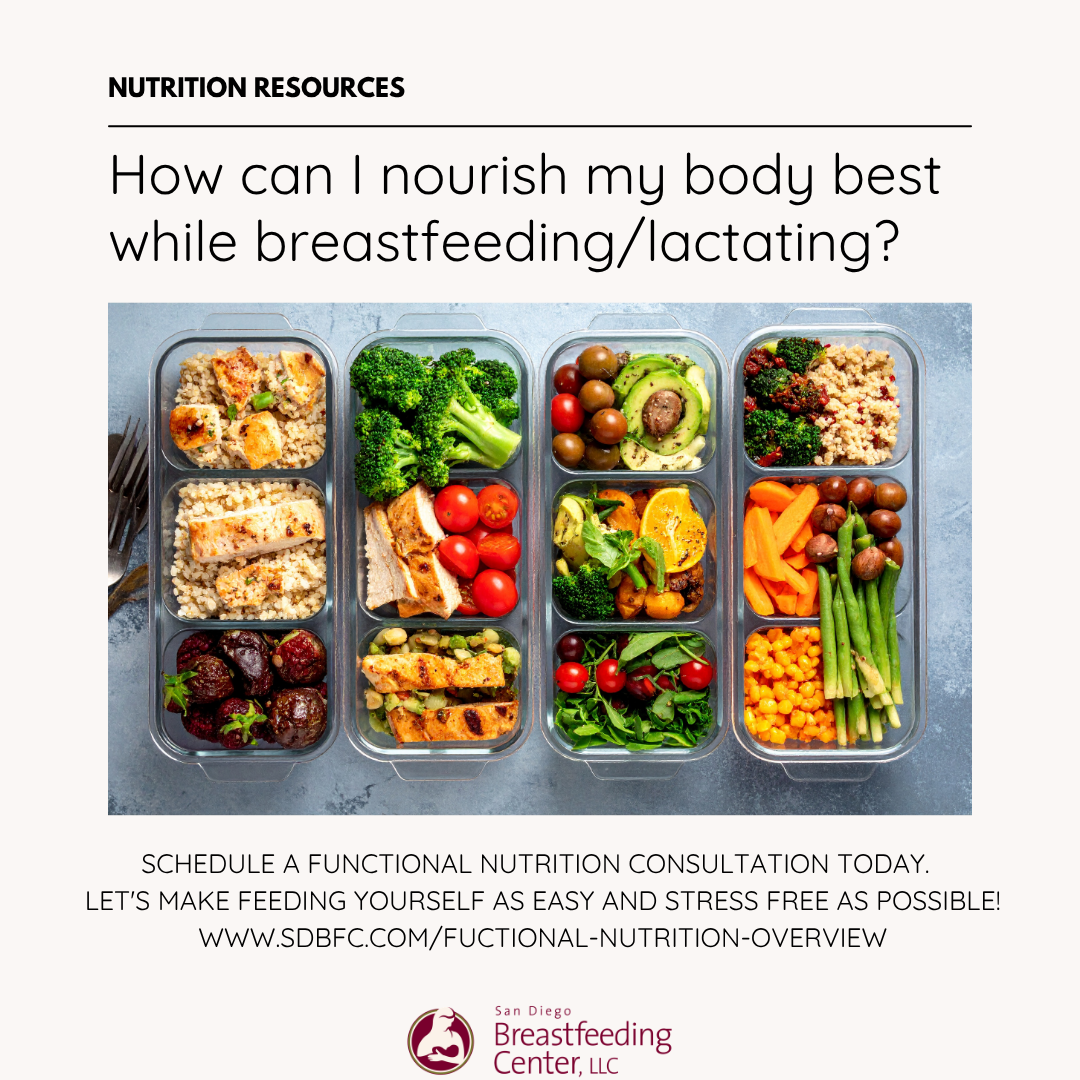
If you’re reading this thinking, “I understand what I should be eating, but I have no idea how to make this work for me,” that’s exactly where individualized support can help.
You can schedule a Functional Nutrition Consultation for personalized support with meal planning, nutrient needs, supplement recommendations, and nutrition concerns during the postpartum and breastfeeding period. Whether you’re dealing with a specific concern such as low milk supply or reflux, or simply want to make sure you’re nourishing yourself well, recommendations can be tailored to your health history, feeding goals, and lifestyle. These visits may also be covered by insurance as part of your lactation care.
Most importantly, remember that so much attention during the postpartum period is understandably focused on nourishing your baby—but you need nourishment, too.
Taking care of the person doing the feeding is part of supporting the breastfeeding/lactating journey.
SDBFC is committed to providing high-quality lactation and functional nutrition consultations to parents in San Diego and beyond. Explore our postpartum, prenatal, and functional nutrition consultations, take a breastfeeding class or attend a workshop.
About the Author
Robin Kaplan has been an IBCLC since 2009, the same year that she opened up the San Diego Breastfeeding Center. Robin was the founding host of the Boob Group podcast and published her first book, Latch: a Handbook for Breastfeeding with Confidence at Every Stage in 2018. Melding her passions for supporting lactating parents and holistic health, Robin finished her Functional Nutrition Certification in 2023. In her free time, she enjoys hanging out with her two teenage boys, hiking, traveling, weaving, cooking, and searching for the best chai latte.


Functional Nutrition for Pregnancy & Postpartum: Support Your Health and Your Baby’s Wellbeing
Pregnancy and postpartum are often painted as joyful seasons—but the truth is, they can also feel overwhelming, exhausting, and full of confusing symptoms. Maybe you’ve been told your bloating, constipation, or fatigue are “just part of postpartum.” Or that your baby’s fussiness is normal and they’ll eventually grow out of it. Perhaps you’ve even been advised to “just cut out dairy” without anyone looking deeper into what’s really going on.
Published Oct 5, 2025
Author: Robin Kaplan, M.Ed, IBCLC, FNC
Pregnancy and postpartum are often painted as joyful seasons—but the truth is, they can also feel overwhelming, exhausting, and full of confusing symptoms. Maybe you’ve been told your bloating, constipation, or fatigue are “just part of postpartum.” Or that your baby’s fussiness is normal and they’ll eventually grow out of it. Perhaps you’ve even been advised to “just cut out dairy” without anyone looking deeper into what’s really going on.
ABOUT SDBFC
The San Diego Breastfeeding Center was established in 2009 by Robin Kaplan, International Board Certified Lactation Consultant, Functional Nutritionist, and parent. Her vision was to create a judgment-free, inclusive support system for families navigating infant feeding challenges.
SDBFC offers a wide range of one-on-one breastfeeding, infant feeding, and nutrition consultations - as well as classes, support groups, online articles, and social media - making it your one-stop-shop for all things infant feeding!
Why Functional Nutrition Matters for Lactating Parents
Our medical history and diet play a huge role in shaping our gut microbiome. Over time, things like thyroid conditions, insulin sensitivity, PCOS, antibiotics, or food intolerances can cause inflammation in the body. This inflammation impacts how we digest food, absorb nutrients, process hormones like insulin and estrogen, and how our body feels overall.
When you’re producing milk, this becomes an even bigger part of the story. If your gut isn’t breaking down proteins well, your baby may react to some of the foods you eat—not because the food itself is “bad,” but because of how your body is processing it. That’s why simply removing dairy or waiting for your baby to “grow out of it” is often just a band-aid. Functional nutrition looks deeper at your health history to heal your gut, which in turn helps your baby digest your milk more comfortably.
And if antibiotics were given during pregnancy, labor, or postpartum, rebuilding “good” bacteria for both parent and baby can help remedy mucus in stool, colic-like symptoms, constipation, and yeast.
What if you didn’t have to just wait it out? With the right support, you can address the root causes of your symptoms, restore balance, and help both you and your baby thrive.
What is Functional Nutrition?
Functional nutrition connects the dots between symptoms and their root causes. Instead of quick fixes, it looks at diet, lifestyle, illness, stress, environment, and genetics to create a personalized plan that supports long-term health for you and your baby.
Who Benefits from a Prenatal Functional Nutrition Appointment?
Pregnancy is the perfect time to lay a strong foundation for both your health and your baby’s development. Functional nutrition may be especially helpful if you are:
Preparing for lactation after a history of low milk supply or breastfeeding/chestfeeding challenges
Managing conditions like PCOS, thyroid imbalance, or gestational diabetes
Looking for a holistic, evidence-based approach to support pregnancy and baby’s growth
Who Benefits from a Postpartum Functional Nutrition Appointment?
The postpartum period brings healing, shifting hormones, and new demands—especially if you’re lactating. Support may be most helpful for:
Adults with chronic inflammation, autoimmune conditions, PCOS, insulin resistance, or gut challenges
Lactating parents struggling with unexplained low supply, plugged ducts, or recurring breast infections
Parents or babies experiencing constipation, diarrhea, bloating, or other digestive discomfort
Babies with reflux, colic, suspected food intolerances, or yeast-related issues
Benefits of Meeting with a Functional Nutrition Counselor
One of the biggest benefits? Being heard. Instead of dismissing symptoms, functional nutrition helps uncover the why behind them—so you can heal and feel better long term. Outcomes may include:
Improved digestion and gut health (for parent and baby!)
Reduced inflammation and food/nutrient absorption
Enhanced immune function
Balanced hormones
Robust milk supply
Improved mood and mental health
Lower risk of chronic conditions like thyroid imbalance, insulin resistance, and autoimmune disorders
Do All Functional Nutrition Counselors Recommend Elimination Diets?
Not at all. Functional nutrition is personalized, not one-size-fits-all. While elimination diets can help identify food sensitivities, they’re not always needed.
Food journals may be used to spot patterns and triggers
If an elimination diet is suggested, it’s usually temporary. And we always provide replacement food recommendations and recipes!
The goal is to heal underlying issues so foods can be reintroduced
Recommendations may also include supplements and lifestyle changes for lasting results
Taking the Next Step
If you’re curious about whether functional nutrition could help during pregnancy or postpartum, the best place to start is with a conversation.
Here’s how to get started:
Book your appointment with our IBCLC + functional nutrition counselor, Robin Kaplan (SDBFC Founder and Owner!)
Fill out our comprehensive intake form so we can understand your full health picture, as well as your baby’s.
Begin your personalized journey with a plan designed just for you and your baby

Whether you’re navigating pregnancy, the early postpartum weeks, or beyond, functional nutrition can be the key to feeling more energized, balanced, and healthy. We can’t wait to help you and your baby thrive.
Don’t let milk supply or digestion troubles cause stress for you or your baby! At each functional nutrition appointment, our IBCLC/Functional Nutritionist completes a full medical history and lactation intake, discusses feeding patterns and symptoms, and offers strategies for supporting your milk supply and healing underlying conditions. Plus, if you are already working with a lactation consultant, we will work collaboratively to support their recommendations and weave in functional nutrition components! Book a one-on-one functional nutrition consultation today
SDBFC is committed to providing high-quality lactation and functional nutrition consultations to parents in San Diego and beyond. Explore our postpartum, prenatal, and functional nutrition consultations, take a breastfeeding class or attend a workshop.
About the Author
Robin Kaplan has been an IBCLC since 2009, the same year that she opened up the San Diego Breastfeeding Center. Robin was the founding host of the Boob Group podcast and published her first book, Latch: a Handbook for Breastfeeding with Confidence at Every Stage in 2018. Melding her passions for supporting lactating parents and holistic health, Robin finished her Functional Nutrition Certification in 2023. In her free time, she enjoys hanging out with her two teenage boys, hiking, traveling, weaving, cooking, and searching for the best chai latte.