
November 1, 2026 • Author: Robin Kaplan, M.Ed, IBCLC, FNC
Have you ever finished feeding your baby, looked at the clock, and realized it's almost time to feed them again?
Maybe you've spent the morning nursing, pumping, washing bottles, and trying to get your baby settled. You haven't eaten breakfast, your coffee is still sitting on the counter, and you're wondering how it's already noon when you haven't gotten anything else done.
If this sounds familiar, we want to remind you that you have been doing something. You've been caring for your baby, and that takes an incredible amount of time and energy.
After years of supporting families through their feeding journeys, we’ve seen how easy it can be for parents to put their own needs aside. Even basic things like eating a meal or getting enough rest can become difficult while you are also recovering from birth, figuring out feeding, and adjusting to life with a newborn,
We've all heard the saying, "You can't pour from an empty cup." But instead of giving you another list of aspirational things you should be doing to take care of yourself, we want to share a few practical tips to make everyday life a little more manageable.
ABOUT SDBFC
The San Diego Breastfeeding Center was established in 2009 by Robin Kaplan, International Board Certified Lactation Consultant, Functional Nutritionist, and parent. Her vision was to create a judgment-free, inclusive support system for families navigating infant feeding challenges. SDBFC offers a wide range of one-on-one breastfeeding, infant feeding, and nutrition consultations - as well as classes, support groups, online articles, and social media - making it your one-stop-shop for all things infant feeding!
Take a Closer Look at Your Feeding Routine
Feeding your baby takes time. But, when feeding becomes painful, stressful, or so time-consuming that you're struggling to meet your own needs, it's worth taking a closer look at what's happening.
For example, if you're triple feeding (breastfeeding, pumping, and supplementing at every feeding), you might feel like you're spending nearly every waking moment feeding your baby or preparing for the next feeding. Or if you're experiencing painful latching, you may find yourself feeling anxious before each feeding even begins.
These challenges don't just affect feeding. They can affect your sleep, your confidence, and your emotional wellbeing.
An IBCLC can help you evaluate what's happening and explore adjustments that support your baby's nutritional needs while making feeding more manageable. You don't have to wait until you're completely overwhelmed to reach out.
Something to try: Think about which part of feeding feels most challenging right now. Is it discomfort, how long feedings take, pumping, or uncertainty about whether your baby is getting enough? Identify the biggest challenge and reach out for support about how to improve this specific issue.
Make Your Basic Needs Part of the Plan
When you're caring for a newborn, it's easy to assume you'll eat, shower, or rest whenever you find a free moment. Unfortunately, those moments don't always happen. Instead of hoping you'll find time, think about how you and your support people can make those things easier.
If your partner is home, perhaps they can prepare breakfast while you feed the baby. If family members want to visit, ask them to bring a meal or help with a household task. Keep easy, nutritious snacks and water near your feeding or pumping spot so they're available when you find yourself nap-trapped. Not sure what to ask for? We’ve compiled some great ideas for quick, nutritious meals and snacks on our blog. Just click here.
Prioritize your rest. Think about what responsibilities someone else could handle so you have an opportunity to rest. Maybe that's taking care of an older child, handling laundry, or settling the baby after a feeding. Remember, it's also okay to let some things wait. Especially on days where there aren’t extra hands around and you're struggling to keep up with household responsibilities.
Your body is still recovering from birth, and if you're chest/breastfeeding, it's also using additional energy to produce milk. Regular meals, adequate rest, and time to recover are important parts of your postpartum health.
Something to try: Before the day begins, identify one thing you need help with and ask someone to take responsibility for it. Be specific about what would make your day easier.
Give Yourself Permission to Change the Plan
Many parents enter postpartum life with expectations about how things will go and feel. Maybe you imagined breastfeeding would come naturally, that you'd be able to maintain your usual routines, or that you'd feel more confident than you do right now.
And then your baby arrives and you realize that things don't always go according to plan.
One thing we hope parents understand is that changing your approach doesn't mean you've failed. It's okay to explore other options if your original feeding plan isn't working for your family.
Your emotional wellbeing matters, too. It's normal to experience a range of emotions after having a baby. But, persistent sadness, anxiety, or feelings of hopelessness require attention. If you're struggling emotionally, reach out to your healthcare provider or a qualified mental health professional. You deserve support for that part of your recovery as well. If your feeding plan is increasing your stress, it’s time to ask for changes that support your goals AND your mental health.
Something to try: Ask yourself whether there's an expectation you're holding onto that's making this season harder. Is it something that truly needs to happen, or is it something you can adjust, postpone, or let go of?
Ask for the Kind of Help You Actually Need
People often tell new parents, "Let me know if you need anything." While the offer is usually sincere, figuring out what to ask for can feel like another task.
Be specific with what tasks actually bring you relief and reduce your stress. Instead of asking someone to "help around the house," ask them to fold the laundry, pick up groceries, or bring dinner. If you need time to rest, then let someone know a great time to stop by and hold your baby so that you have an opportunity to sleep.
Maybe what you need is just a shoulder to lean on. We know new parenting can feel isolating. Your social life and daily to-do’s look different after bringing your baby home. Take a moment to reach out to a friend to talk to when you’re feeling lonely or overwhelmed. If you don’t have access to an established support network, then take intentional steps to build a community of people you can connect with regularly. This could look like attending local support groups for new parents such as our Lactation & Infant Feeding Support Group.
Remember that support doesn't have to come only from family and friends. Lactation consultants, postpartum doulas, healthcare providers, and mental health professionals can all play important roles in helping families navigate postpartum challenges.
Something to try: Make a short list of two or three things that would genuinely make your week easier. The next time someone offers to help, you'll have an answer ready.
When Your Cup Is Running Low, Start Here
If you're feeling stretched thin, you don't need to make a dozen changes at once. Start with whatever feels most difficult right now.
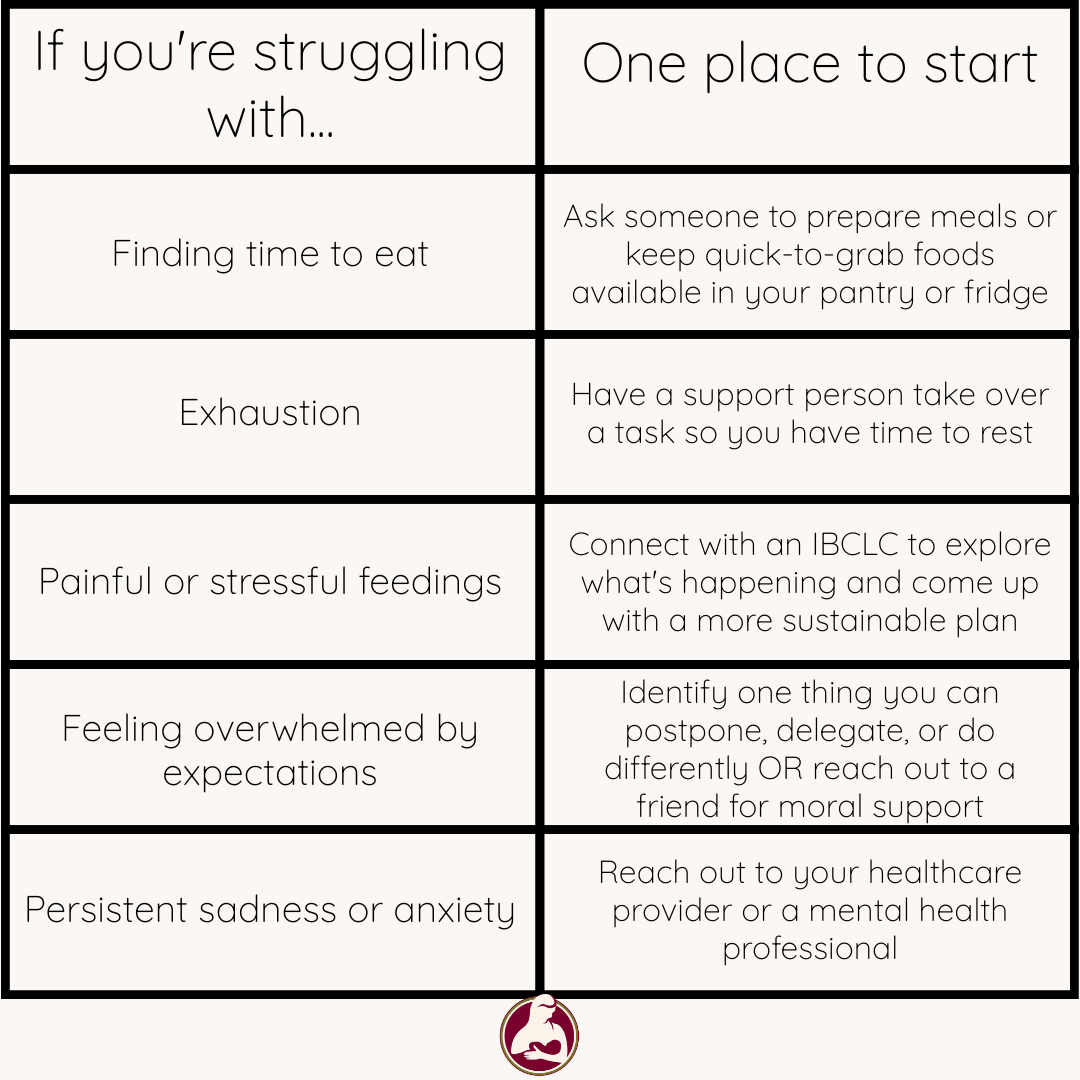
The goal isn't to add more things to your to-do list. It's to recognize where you need support and make small adjustments that can help you feel less overwhelmed.
You Deserve Care Too
When you have a baby, it's natural to focus most of your attention on making sure the baby is getting everything they need. We also hope you'll remember that your recovery, nutrition, rest, and emotional wellbeing deserve attention too.
You don't need a perfect routine and you certainly don't need another set of seemingly unattainable expectations. Sometimes the most helpful thing you can do is recognize that something isn't working and give yourself permission to ask for help or try a different approach.
We've all heard that you can't pour from an empty cup. But, here is what we really want you to know: You don’t have to wait until your cup is empty before someone helps you refill it.
At the San Diego Breastfeeding Center, we believe feeding support should consider the whole family, including the wellbeing of the parent. Our team is here to support you if you're navigating feeding challenges or need help finding a plan that works for your family.
SDBFC is committed to providing high-quality lactation and functional nutrition consultations to parents in San Diego and beyond. Explore our postpartum, prenatal, and functional nutrition consultations, take a breastfeeding class or attend a workshop.
About the Author
Robin Kaplan has been an IBCLC since 2009, the same year that she opened up the San Diego Breastfeeding Center. Robin was the founding host of the Boob Group podcast and published her first book, Latch: a Handbook for Breastfeeding with Confidence at Every Stage in 2018. Melding her passions for supporting lactating parents and holistic health, Robin finished her Functional Nutrition Certification in 2023. In her free time, she enjoys hanging out with her two teenage boys, hiking, traveling, weaving, cooking, and searching for the best chai latte.


