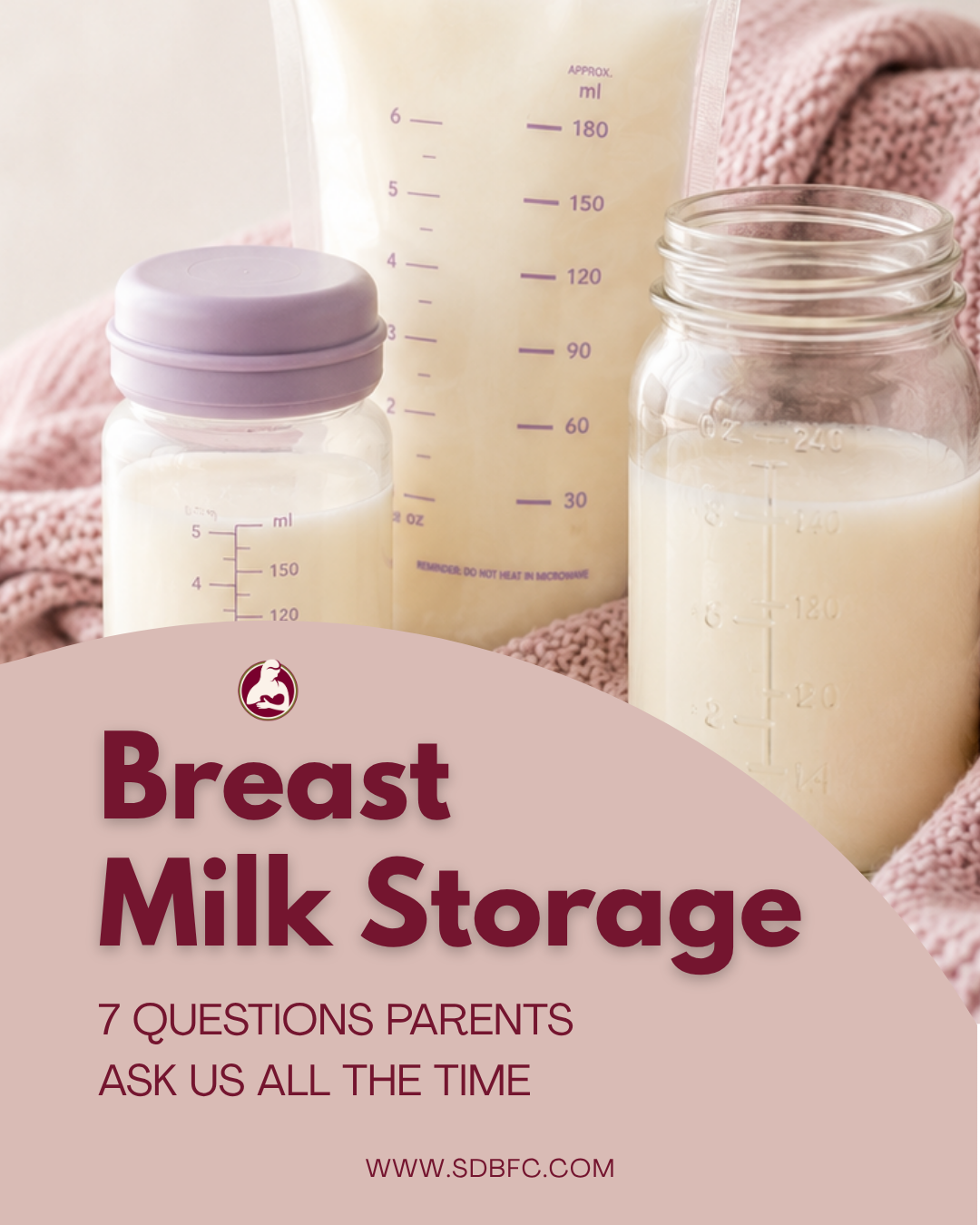
Breast Milk Storage: Answers to the Questions Every Parent Asks
July 31, 2026 • Author: Robin Kaplan, M.Ed, IBCLC, FNC
If there's one thing almost every breastfeeding parent worries about, it's whether they're storing their milk correctly.
Maybe you collected half an ounce in your passive milk collector and aren't sure what to do with it. Maybe you've already pumped 3 ounces and wonder if you can add more later. Or maybe you're trying to build a freezer stash before returning to work and don't want to waste a single drop.
The good news…. Breast milk is remarkably resilient. While there are best practices that help preserve its quality, your milk isn't "ruined" if you haven't followed every recommendation perfectly.
Here are some of the most common breast milk storage questions we hear at the San Diego Breastfeeding Center.
ABOUT SDBFC
The San Diego Breastfeeding Center was established in 2009 by Robin Kaplan, International Board Certified Lactation Consultant, Functional Nutritionist, and parent. Her vision was to create a judgment-free, inclusive support system for families navigating infant feeding challenges. SDBFC offers a wide range of one-on-one breastfeeding, infant feeding, and nutrition consultations - as well as classes, support groups, online articles, and social media - making it your one-stop-shop for all things infant feeding!
Can I Add Freshly Pumped Milk to Milk That's Already in the Refrigerator?
This is probably the question we hear most often.
If you just pumped some milk and already have chilled milk in the refrigerator, it's best to cool the freshly expressed milk first before combining it with the refrigerated milk.
One easy method is to:
Place your freshly pumped milk in a separate bottle or container with a lid.
Refrigerate it until it's cooled.
Then combine it with the already chilled milk.
This helps avoid warming and re-cooling the milk already in your refrigerator.
I Collected Half an Ounce in My Passive Milk Collector. What Should I Do With It?
Whether you're using a silicone milk collector or another passive milk collector, it's completely normal to collect small amounts throughout the day.
You have a few options:
Store it in a milk storage bag in the refrigerator or freezer.
Refrigerate it until it's cold before combining it with other chilled milk from the same day (as described above).
Those small amounts really do add up over time.
Should I Freeze Tiny Amounts or Wait Until I Have More?
There's no "perfect" amount to freeze.
Some parents prefer freezing milk in 2–4 ounce portions because that's close to what many babies take in a feeding.
Others freeze smaller amounts that can be used to top off/combine with another bottle or mix into solid foods later.
The best amount is the amount your baby typically uses so you aren't thawing more milk than you need.
Can I Pump Several Times During the Day Into One Container?
Kind of—but with one important step.
Instead of adding warm milk directly to cold milk, cool milk from each pumping session first before combining them into one larger container in the refrigerator.
Many parents find it helpful to keep:
One larger mason jar or bottle for the day's chilled milk
One smaller bottle for freshly pumped milk that's still cooling
Once both are cold, they can be combined.
Do I Need Breast Milk Storage Bags?
Not necessarily.
Milk can safely be stored in:
Clean bottles with lids
Glass containers, like mason jars
Breast milk storage bags designed for freezing
If you're freezing milk, storage bags save space in the freezer (especially when you freeze them lying flat). If you're using milk within a few days, bottles or glass containers often work just as well.
How Long Can Breast Milk Stay in the Refrigerator?
This is one of the most important storage questions, and we've created an entire guide dedicated to refrigerator storage timelines.
👉 Read How Long Does My Breast Milk Stay Fresh?
That article walks through current storage recommendations and when it's time to use or freeze your milk.
Do I Need a Large Freezer Stash Before Returning To Work?
Nope.
One of the biggest misconceptions is that you need an overflowing freezer before returning to work. In reality, most families only need enough milk for the first day or two away from their baby. As you pump during your workday, that milk typically replaces what your baby drinks the following day. Instead of focusing on filling an entire freezer, focus on creating a sustainable pumping routine that keeps up with your baby's needs.
What If I Didn't Store My Milk This Way?
Don't panic.
These recommendations are considered best practices because they help preserve the quality of your milk and make storage easier to manage. If you've occasionally combined milk differently or stored it another way, that doesn't automatically mean your milk is unsafe or unusable.
If you ever have questions about your specific situation, an IBCLC can help you determine the best next steps.
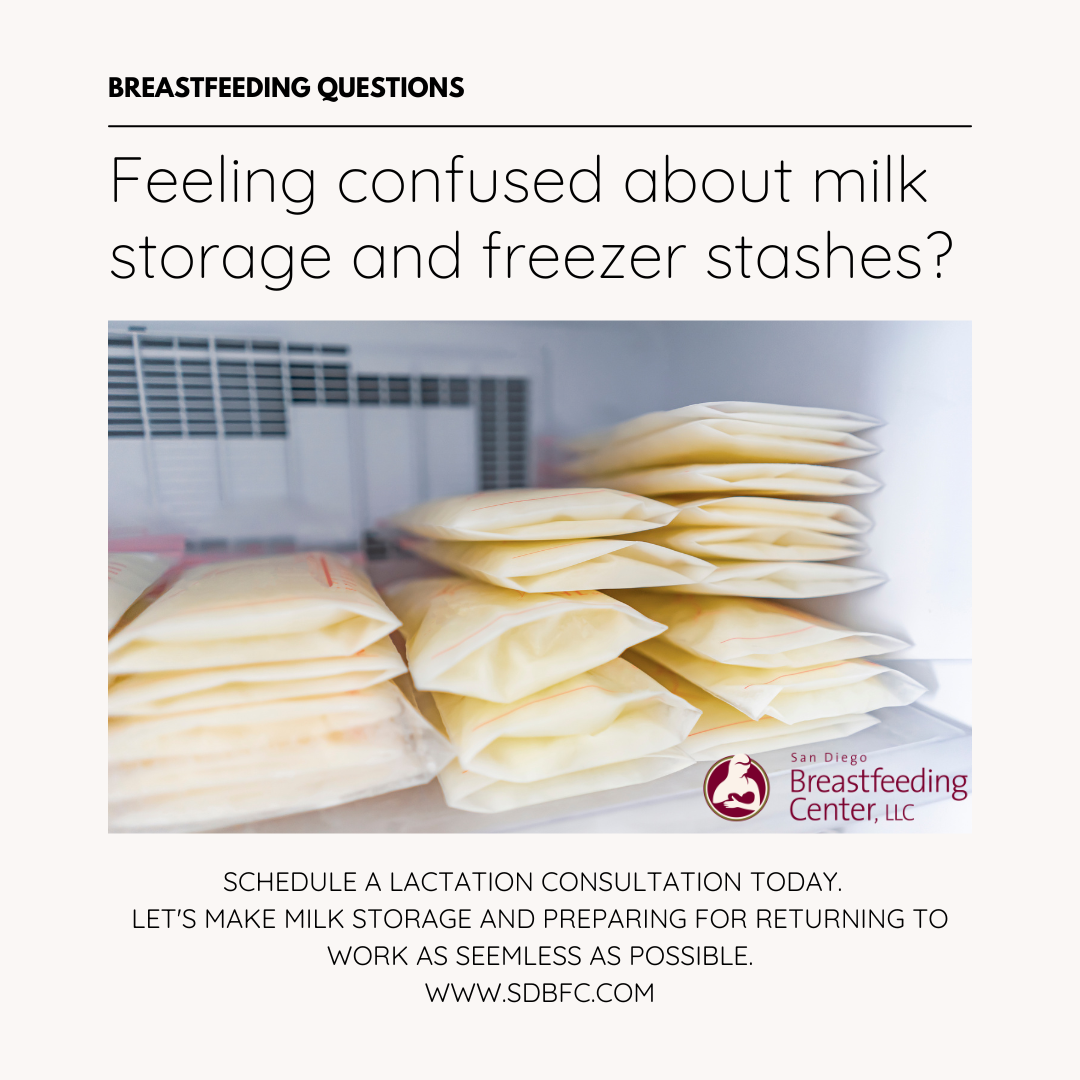
Every ounce of human milk represents time, effort, and love. It's completely understandable to want to make sure you're storing it correctly.
The good news is that breast milk storage doesn't have to feel overwhelming. A few simple habits—like cooling freshly expressed milk before combining it with already chilled milk, using clean containers, and knowing when to refrigerate or freeze—can help you feel more confident every time you pump.
If you're preparing to return to work, building a freezer stash, or simply have questions about pumping and milk storage, our team at the San Diego Breastfeeding Center is here to help you create a plan that works for your family.
SDBFC is committed to providing high-quality lactation and functional nutrition consultations to parents in San Diego and beyond. Explore our postpartum, prenatal, and functional nutrition consultations, take a breastfeeding class or attend a workshop.
About the Author
Robin Kaplan has been an IBCLC since 2009, the same year that she opened up the San Diego Breastfeeding Center. Robin was the founding host of the Boob Group podcast and published her first book, Latch: a Handbook for Breastfeeding with Confidence at Every Stage in 2018. Melding her passions for supporting lactating parents and holistic health, Robin finished her Functional Nutrition Certification in 2023. In her free time, she enjoys hanging out with her two teenage boys, hiking, traveling, weaving, cooking, and searching for the best chai latte.


