

Breastfeeding the Older Baby - What to Expect at 6-9 months
Wondering what breastfeeding/chestfeeding look like when your baby is 6-9 months? Get tips for nursing an older baby from our team of San Diego lactation consultants.
Originally published on March 9, 2016
Revised October 5, 2024
Author: Robin Kaplan, M.Ed, IBCLC, FNC

Wondering what breastfeeding/chestfeeding look like when your baby is 6-9 months? As our little ones continue to grow physically {begin to roll over, sit up, crawl} and developmentally {sleep longer stretches at night and interact more with the world around them}, we notice the impact of these changes on their feeding patterns.
In this blog series, Breastfeeding the Older Baby - What to Expect and How to Adjust, we will answer some of the most common questions and concerns we hear from parents, as they navigate breastfeeding/chestfeeding a 6-9 month old. What are some normal behaviors to expect from a baby this age and how can you tell if there’s a challenge that you should seek lactation support for?
ABOUT SDBFC
The San Diego Breastfeeding Center was established in 2009 by Robin Kaplan, International Board Certified Lactation Consultant, Functional Nutritionist, and parent. Her vision was to create a judgment-free, inclusive support system for families navigating infant feeding challenges.
SDBFC offers a wide range of one-on-one breastfeeding, infant feeding, and nutrition consultations - as well as classes, support groups, online articles, and social media - making it your one-stop-shop for all things infant feeding!
What does breastfeeding/chestfeeding look like in months 6-9?
How often should a baby be breastfeeding and how long should feedings take?
At 6-9 months, breastmilk is still a vital source of nutrition, even as your baby starts to explore solid foods. The frequency and length of breastfeeding/chestfeeding sessions may vary depending on your baby’s appetite and routine, but here are some general guidelines:
Breastfeeding frequency: Typically, babies breastfeed/chestfeed around 5-6 times per day at this stage, with some babies still nursing in the middle of the night, as well.
Duration of feedings: Babies at this age can be very effective at removing a lot of milk in a very short period of time. Each nursing session may last anywhere from 5 to 20 minutes (on average), depending on your baby’s efficiency, interest, and when they last fed.
Feeding positions: As your baby becomes increasingly mobile, you may notice that they may want to move from the cradle hold to sitting or standing or some variety of nursing gymnastics. Handing your baby something soft or crinkly to play with while nursing may help them focus and stay in one position until they are finished feeding.
My baby is eating solid food now, how does this impact our breastfeeding/chestfeeding routine?
Introducing solid foods to your baby’s diet can shift your breastfeeding/chestfeeding routine, but your milk continues to be the main source of nutrition. Here’s how solids may impact your feeding routine and how to protect your milk supply in the process:
Complementary, not replacement: Solids are meant to complement your milk at this stage, not replace it. Continue to breastfeed/chestfeed (or offer a bottle of your pumped milk) before solid meals to maintain milk intake.
Keep serving sizes of solid foods small: The goal for solids between 6-9 months is to familiarize your baby with different tastes and textures, while also developing hand-eye coordination, as your little one learns to self-feed. Keeping serving sizes small will ensure that your baby will not fill up on solids and continues to take around 30oz a day of your milk by breastfeeding and/or bottle.
Ensuring milk production: To keep your milk supply stable, continue breastfeeding/chestfeeding on demand and ensure regular milk removal through nursing or pumping.
How much weight should my baby be gaining at this age?
After six months of age, normal weight gain for a breastfed/chestfed baby is 2-3oz per week. Weight gain slows during this time as babies begin to roll over, scoot, crawl, and walk, burning more calories by being more active throughout the day. If you are ever concerned about your baby’s weight gain patterns, you can reference theWHO growth charts, which were created specifically for breastfed/chestfed infants.
My baby keeps biting me while breastfeeding/chestfeeding. What can I do to stop this?
If your baby is biting while breastfeeding/chestfeeding, it can be painful, but there are ways to gently prevent and correct this behavior. Here are some tips to help stop biting during feedings:
Watch for signs: Pay attention to cues that your baby may be done feeding or about to bite, such as decreasing swallows, adjusting their latch, or giving you a smirk like they are about to do something to get your attention. If you see one of these signs, immediately unlatch your baby before they have an opportunity to sink their teeth into you.
End the feeding calmly: If your baby bites, immediately stop the feeding and calmly but firmly say "no biting" or "that hurts." This helps your baby understand the connection between biting and the end of feeding.
Offer alternatives: Babies may bite when teething or exploring new sensations. Offer a cold teething toy or a chilled cloth before or after nursing to soothe sore gums.
Stay consistent: Respond the same way each time your baby bites, using calm but firm guidance. With repetition, your baby will begin to understand that biting interrupts feeding.

If you still have questions about breastfeeding/chestfeeding or offering solids to your 6-9 month old, we are just a consult away!
As your baby continues to grow and develop, their feeding patterns will naturally change, but navigating these transitions doesn't have to be stressful. Whether you're adjusting to a new breastfeeding/chestfeeding schedule, introducing solids, or dealing with challenges like biting, it's important to feel confident in your approach. If you have further questions or concerns about feeding your 6-9 month old, or need guidance on maintaining your milk supply, the San Diego Breastfeeding Center is here to help. Book a one-on-one appointment with one of our lactation consultants today for personalized support tailored to you and your baby’s needs.
SDBFC is committed to providing high-quality lactation and functional nutrition consultations to parents in San Diego and beyond. Explore our postpartum, prenatal, and functional nutrition consultations, take a breastfeeding class or attend a workshop.
About the Author
Robin Kaplan has been an IBCLC since 2009, the same year that she opened up the San Diego Breastfeeding Center. Robin was the founding host of the Boob Group podcast and published her first book, Latch: a Handbook for Breastfeeding with Confidence at Every Stage in 2018. Melding her passions for supporting lactating parents and holistic health, Robin finished her Functional Nutrition Certification in 2023. In her free time, she enjoys hanging out with her two teenage boys, hiking, traveling, weaving, cooking, and searching for the best chai latte.
Related Posts

Adjusting the Dream of Breastfeeding
Chest/breastfeeding doesn’t always go as planned. But you can find your way with the right support. Read inspiring chest/breastfeeding stories from our readers.
A few weeks ago, we sent out a call for Breastfeeding/Chestfeeding/Pumping memoirs. Our desire was to flood the Internet with beautiful breast/chestfeeding and pumping stories of triumph, overcoming challenges and struggles, and positive outcomes, regardless of the total amount of milk a parent was producing. We are thrilled to share these stories with you, our readers, and hope that they offer support and inspiration for you, wherever you are in your breast/chestfeeding or pumping journey.
Thank you to all of the parents who submitted their stories! If after you read these memoirs you are inspired to submit your story, feel free to send it to RobinKaplan@sdbfc.com.
This memoir is from Becky.
We were in Cambodia. Part business, part travel. I was seven months pregnant with our first baby and loving every bit of what first time mamahood brings. The flutters, the kicks, the dreaming of what would be.
We had fought for this baby — with years of infertility and trying and going through the system and finally attempting IVF, as our last effort — and there she was…a little heart beating on the first ultrasound. We did it. And we were ready for all she had for us.
As we rode wide-eyed through the streets of Cambodia, I saw her. A mama, holding a toddler, nursing an infant…all while balancing on the back of the moped her husband was steering.
That would be me someday. I was sure of it. It was all so natural and freeing. I was ready and excited to breastfeed.
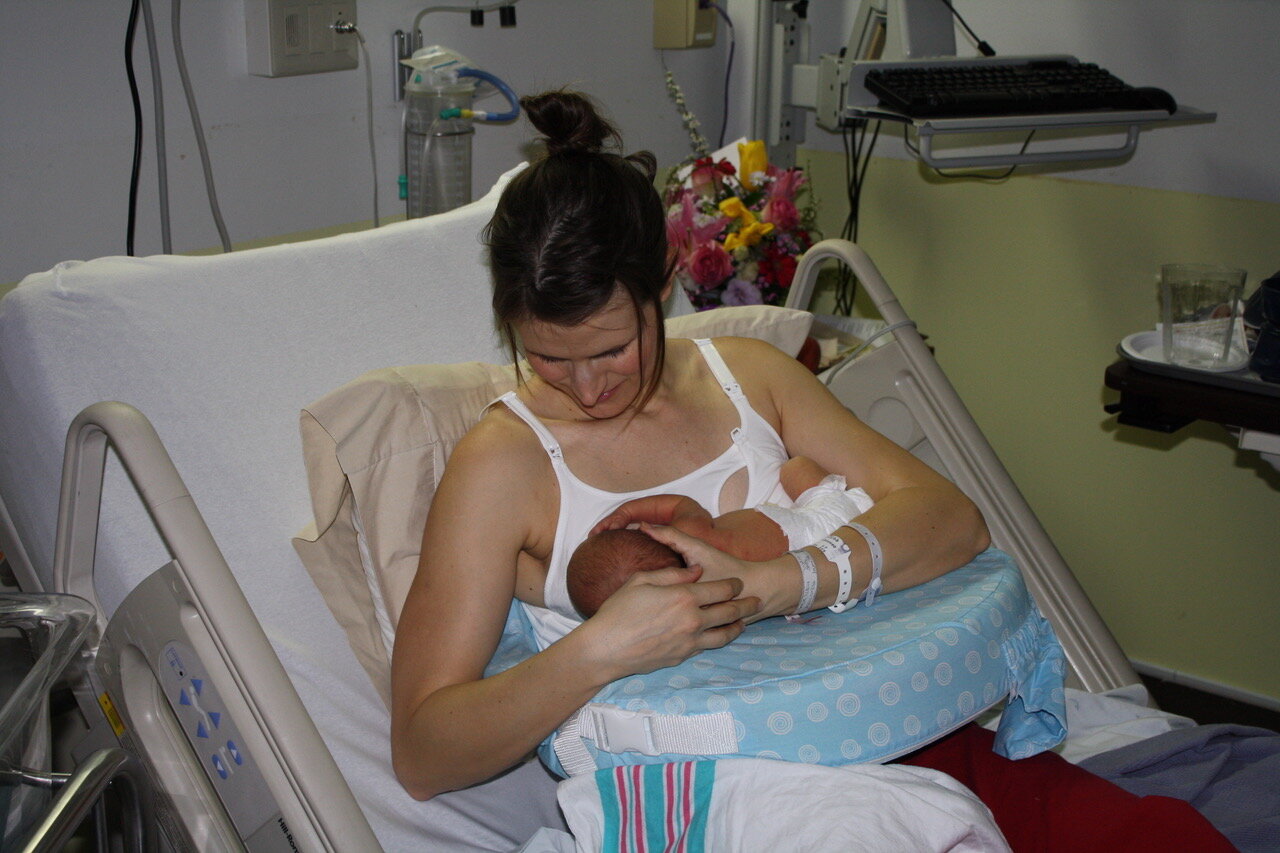
January 2011, our baby came at rocket speed. We were in front of the hospital as she made her entrance into the world. It was freezing outside. She was tiny and shivering her ounces away.
We were on cloud nine. First time parents. I was high on endorphins and oxytocin and the thrill of a fast labor. I was walking around hours later. Things could not be going better. (I had no idea these things were not normal).
She seemed to latch well. The nurse told me I had the perfect breasts for breastfeeding. I had read all the books. I was feeling confident.
Too confident.
The next day, they said she was losing weight too quickly. I couldn’t understand it. I almost didn’t believe it. They almost didn’t send us home, but we were resolute. We thought we just needed to get out of the hospital, to get home and comfortable.
What I didn’t know is how hard it could be. From everything I had heard, it would be natural, and it would just work.
But it didn’t. Our sweet baby girl was not gaining weight. The pediatrician threatened to label her with ‘failure to thrive.’
In the post-baby haze, I didn’t capture the gravity and seriousness of it all. I was caught in the trap of first time motherhood that takes every input from every direction and confuses it with intuition. I was lost. There was no support.
I cried myself to sleep clutching our new baby, nearly every night.
We have five kids now. And every single one of them has a breastfeeding story of their own. We always tried and it never went exactly as I wanted. Yet, every baby, every child ended up thriving.
With our first, I used a supplemental nursing system with formula until she could also use table food, at which point I nursed her until she was 14 months old and we were ready for our next embryo transfer.
With our second, he got off to an amazing start. I thought “ah, THIS is a different story.” He gained weight well in the first several weeks, and he began sleeping more. I couldn’t have been more thrilled. Then, at his 8 week appointment, he hardly gained an ounce…in FOUR weeks. It was like a punch to the gut. All the self-doubt and trauma returned. We supplemented with formula until we moved nearer to a dear friend who provided her breastmilk for him. At 9 months my supply was gone, and he plumped up on my friend’s luscious, gracious milk.

With our third, we were ready. We met with San Diego Breastfeeding Center while he was still in utero. I had a midwife and a doula and an acupuncturist and an LC, and I was ready. He was a spitfire from birth. He rarely slept easily but nursed well, I thought. At three weeks, I sobbed as I left SDBFC group meeting. He had hardly transferred any milk. He wasn’t thriving. All the terror and sadness returned…yet, somehow, with help, we pushed through. I pumped, and supplemented from the meager ounces I could squeeze out. It was trying. But he made it to self weaning at 11.5 months.

Our fourth, our only non-IVF baby, was born at home. We were getting more and more natural as time went on. Maybe, I thought, that would help with breastfeeding. And he did well. I held onto every encouraging word from my LC. I remembered the diligence my body required. I was exhausted, but it didn’t matter...he made it. My supply was JUST enough, so I didn’t pump, and I didn’t supplement. It felt like a breath of fresh air. He weaned himself at 11 months, much to my heart’s sadness…yet I had to also rejoice. We made it.
Our fifth and final baby was a champ. Born at home and co-sleeping, she was the best weight-gainer-sleeper of them all. It felt like smooth sailing. Then, suddenly when she was 7 months old, my hormones went haywire, I had a crazy migraine, my period returned and my supply tanked. Where she used to be gulping, there was nothing but air. Once again, my LC walked me through with encouragement and a solid, educated plan. We used donor milk, and soon she’ll be transitioning to 100% table food.
I still think about that nursing mama on the back of the moped in Cambodia. I’m glad that is her story. I’m glad that for many women in the world who chose to breastfeed, their babies thrive.
But for those of us whose babies don’t thrive, whose dreams of breastfeeding are altered or jolted or completely shattered, we know that every ounce of effort is part of our souls. Every compromise is for the good of our babies’ health, and every bit of love we show by adjusting our dreams is what will set them on the thriving course to someday make their own dreams come true.

Our Breastfeeding Journey
A few weeks ago, we sent out a call for Breastfeeding/Chestfeeding/Pumping memoirs. Our desire was to flood the Internet with beautiful breast/chestfeeding and pumping stories of triumph, overcoming challenges and struggles, and positive outcomes, regardless of the total amount of milk a parent was producing. We are thrilled to share these stories with you, our readers, and hope that they offer support and inspiration for you, wherever you are in your breast/chestfeeding or pumping journey.
Thank you to all of the parents who submitted their stories! If after you read these memoirs you are inspired to submit your story, feel free to send it to RobinKaplan@sdbfc.com.
This Memoir is from Casey
Our breastfeeding journey began in June of 2018, following a traumatic (for me, fortunately not my son) childbirth. Combating an unexpected c-section, magnesium treatments, dehydration from blood loss, and significant tongue and lip ties with a macrosomic baby (11lb7oz) was a rough start. For about 5 weeks, I nursed my son with a shield, then immediately supplemented with pumped milk and formula, pumping almost as often as I was nursing him. I was recommended to see an IBCLC, and met with her a few weeks later, as well as regularly attending support groups one to two times a week. Our son had his lip and tongue ties revised, and we were able to immediately drop the shield and successfully latch FINALLY when he was about 6 weeks old. I attended support groups regularly, even once we established a solid latch and experienced success, to support others who were struggling with similar issues and for the camaraderie.

As we continued to nurse, my original goal of at least 1 year came and I had a choice to make. To conceive, my husband and I require IVF. While there are some unknowns and potential risks associated with nursing through infertility treatments, I consulted an IBCLC as well as professionals who research medication interactions with pregnancy and breastfeeding and decided the potential that the treatment wouldn’t work was worth the risk of continuing to nurse my son.

In July of 2019, we transferred an embryo and became pregnant with my second kiddo. My son nursed throughout the pregnancy, dry nursing when my supply diminished from typical pregnancy hormones, and continued as my colostrum came back in shortly after. I worked through some nursing aversion that arose from those same hormones. In March of this year, literally the same day that the state of California started a stay at home order, I went to the hospital to be induced. This was my first and only time away from my first nursling overnight, as my original plan of having him come in and snuggle with me and nurse was thwarted by the pandemic. I gave birth to my daughter via c section on my second day at the hospital, and immediately began to nurse. She was much smaller than my son, only 7lbs1oz and had some temperature and blood sugar issues shortly following birth and wound up spending her first night in the NICU. (I need to say that those long term NICU moms are the bravest women I’ve ever met, and many of them were pumping day and night to provide for their babies, even as their stay was stretched over several months.)
I traveled slowly to and from the NICU every couple hours to nurse my daughter, but her sugars needed a bit of support and we supplemented with formula after nursing those first few days.
After 5 days in the hospital, we finally got to go home and see my son. I wasn’t sure if he’d still be interested in nursing after 5 days with nothing, but as soon as I sat down at home, he instantly latched as if nothing had changed. I tandem nursed both my babies for the first time- my son at 21 months old, my daughter at 3 days old.

It’s been 4.5 months and both of my children still nurse well. I’m grateful that my daughter didn’t have any ties or other latching issues and was able to gain weight well. My new breastfeeding goal is as long as each of them want to nurse, though we have scaled back the frequency for my toddler, so that I have time to function throughout the day. He was thrilled when my full milk came back in!
I will forever be grateful to all of the IBCLCs for helping me salvage my breastfeeding relationship with my son and for continuing to support me and numerous other nursing parents to provide our children with the best start possible.

Sleeping Like A Baby – 4-12 Months
Have you been asked this question: How is your baby sleeping? This is my least favorite question because it puts the parent in a position to evaluate or validate their parenting skills based on their child’s sleep. The reality is that your baby’s sleep habits may have everything to do with brain development and how the brain organizes sleep cycles and awake windows.
By Jen Varela
Have you been asked this question: How is your baby sleeping? This is my least favorite question because it puts the parent in a position to evaluate or validate their parenting skills based on their child’s sleep. The reality is that your baby’s sleep habits may have everything to do with brain development and how the brain organizes sleep cycles and awake windows. I think the perfect answer to that question is: “They are sleeping like a baby!”

What does it mean to sleep like a baby?
The first thing to consider is how much sleep your little one is getting. The National Sleep Foundation (NSF) recommends that infants age 4 to 11 months sleep for 12 to 15 hours in a 24-hour period, while toddlers age 1 to 2 years old get 11 to 14 hours of sleep during that same time frame. The NSF has a very informative chart listing recommended hours of sleep for children and adults at its website, which can be a helpful resource for parents.
As your baby grows month by month, the amount of sleep they will need in a 24-hour period will decrease, along with the number of naps they will have in the day. One of the most challenging times for parents is when their infants are between 4 and 5 months in age: The length of a nap will range from 20 minutes to two hours, and the number of naps in the day could be anywhere between three and five.
Although the NSF doesn’t categorize sleep as day sleep or night sleep, the time of day when the nap happens and the combined total hours of sleep during naps do affect night sleep. The myth “if your baby skips a nap, then he will be tired and sleep better at night” might sound logical, but the reality is that the placement and quantity of day sleep can affect the number of night awakenings and create early rising patterns.
So how do you know when your baby should nap? Using the 12-hour clock to schedule naps for your little one might be effective; however, focusing on how long your little one is awake between naps, and especially between the last nap and bedtime, is where the magic happens. When a baby is awake too long, cortisol is released in the system, which gives your little one a “second wind” and suppresses the sleep pressure. Once the cortisol has dissipated, you will have a second opportunity to get your child to sleep. There is a direct link to spending too much time awake before bedtime and an increase in night awakenings.

Here is a general guideline to the number of naps you can expect your child to take, based on age:
4-5 months - 3-4 naps
6-8 months - 3 naps
9-12 months - 2 naps
Just as the total amount of sleep needed in a 24-hour period will decrease with age, the amount of time your baby can be awake between naps will increase.
Here are recommended ranges of awake time between naps, by age:
4-5 months - 90-minutes
6-8 months - 1 ½ to 2 hours
9-10 months - 2-3 hours
11-12 months - 3-4 hours

There is also another HUGE factor affecting your baby’s sleep. Sleep “regressions” are really “progressions” related to developmental milestones and major lifestyle shifts called world view changes. Developmental milestones will be sleep disruptors, as children spend more time in active Rapid Eye Movement (REM) sleep. According to researcher Nathaniel Kleitman , “REM dreaming allows us to process daytime emotional experiences and transfer recent memories into longer-term storage.” On the other hand, the purpose of quiet, non-REM sleep is to allow the mind and body to rest and recharge.
The biggest sleep disruptors related to developmental milestones and world view changes:
World view changes: Moving, travel, parents going back to work, new caregiver or daycare
Developmental milestones:
4-6 months – A big developmental burst occurs between 4 and 5 months and many babies go through a sleep regression during this time.
Finds toes
Vision increases
“Personality” shows up
6-9 months
Rolls over in both directions
Sits momentarily without support
Crawling begins
9-11 months
Pulls self to standing
Cruises the furniture
12 months
Takes a few steps
During times when it is clear that your little one is waking at night because of a developmental leap, the very best thing you can do is protect their sleep. Helping your child get back to sleep and keeping the night awake time to a minimum will help keep the “sleep tank” full. Once they are not working on that new developmental milestone, the night awakening frequency will decrease. It is the same concept for teething and sickness—protect their sleep and get them back to sleep as soon as possible. (I also have other sleep tips to help your baby during sickness. )
Babies will have the largest amount of brain growth in their lifetimes during the first eight months of life. Sleep is a large part of that growth, and when your little one gets the necessary amount of sleep it improves the quality of sleep for the whole family. I promise that sleep is in your future, even if your baby’s sleep habits seem to always be changing. It won’t always be like this.
Top Tips:
Be mindful of the amount of time awake, especially before bedtime.
Avoid sleep deprivation; you want to keep the “sleep tank” full, making sure your little one is getting enough sleep in 24 hours. Note: Even 20 minutes more a day can make a difference.
Develop a bedtime routine that you do in the same fashion and order each night, with wind-down activities such as a massage, song, or book.
Ask your doctor when:
You notice your baby snores loudly and persistently.
Total sleep time is less than 9 hours in a 24-hour period.
You are considering night weaning.

For almost a decade, Jen Varela, a Certified Gentle Sleep Coach®, co-author of “Loved to Sleep”, and the founder of Sugar Night Night, has been helping families teach their babies and toddlers to sleep through the night while keeping tears to a minimum.
As a pediatric sleep consultant, Jen focuses on the needs of each family’s unique sleep goals whether they are a co-sleeping family, room share with their child or the child is in their own room. She is located in San Diego, California and provides video coaching nationwide. She offers one-one-one sleep coaching services and workshops for 4 ½ month old’s to 5 years old, education and sleep shaping information for parents with infants under 4 ½ months.
www.sugarnightnight.com
http://www.facebook.com/SugarNightNight
Instagram: @SugarNightNight
https://www.linkedin.com/in/jenvarela/

5 Breastfeeding Myths and Misconceptions that Really Annoy the Heck Out of Us!
How many times have you heard a so-called breastfeeding ‘fact’ from a family member, friend, healthcare professional, or online resource that has your ‘mama-radar’ going off at warp speed? Maybe something just doesn’t sound right. Maybe it goes against all of your breastfeeding instincts. Maybe it is completely contradictory to what you heard the previous day. Well, it’s time to start busting those myths and misconceptions!
World Breastfeeding Week 2019 begins in a few days and this year’s theme is all about empowering breastfeeding families. We couldn’t think of a better way to empower breastfeeding families than by providing real facts to some of the most common breastfeeding myths/misconceptions! We will also be chatting about additional breastfeeding misconceptions on Baby Tula’s Facebook Live on August 2, 2019 at 10am PST, so definitely join us that day!
So, here we go…..
Myth #1: When pregnant, you should rough up your nipples to prepare them for breastfeeding.
Ok, so who thought up this ridiculous idea??? Why would we ever think that "roughing up" our nipples by rubbing them with a towel was a good recommendation. There is no need to cause nipple trauma and scabbing before your baby even arrives! In fact, rubbing your nipples can actually remove the protective substances produced by the breast during pregnancy and afterwards. Sure, your nipples may feel sensitive for those first few days to weeks, but with a great latch, they will become less sensitive over time, all on their own. No need to do anything to prepare them prior to your baby being born.

Myth #2: If your baby feeds more than every 2-3 hours, then he/she is not getting enough.
So, this statement is a little complicated. Sometimes, this can be true, especially if your baby is not gaining weight well and feeding every hour throughout the day and night. This situation might indicate that your baby might not be getting enough milk and your milk supply/baby milk transfer should be assessed.
Typical baby behavior is feeding about 8-12 times per 24 hours, especially for the first few months. Remember, babies’ tummies are small, so they need frequent, small feedings. Some babies with reflux and tummy issues also like small, frequent feedings. There are also situations where babies temporarily feed more frequently, like during cluster feedings times (aka witching hours) and during growth spurts (which last a few days.) Cluster feeding often happens when your baby needs a bit more snuggling time to unwind from the day and growth spurts are nature’s way of requesting more milk for future feedings. So, these are totally normal situations when a baby would feed more frequently than every 2-3 hours and don’t indicate a low supply, at all.
Myth #3: Nursing beyond a year is just for mom’s benefit
So, let’s just think about this one for a second. Is there an on/off switch that makes breastmilk less valuable and nutritious on a baby’s first birthday? Does it suddenly lose all of its immunological properties? I think not. In fact, there are so many nutritional, social, mental, and physical benefits for breastfeeding beyond a year, as well as the fact that breastfeeding beyond a year is normal. Kellymom.com has incredible resources on this subject, so I will just share a few of my favorites:
According to Dewey (2001), in the second year (12-23 months), 448 mL of breastmilk provides:
29% of energy requirements
43% of protein requirements
36% of calcium requirements
75% of vitamin A requirements
76% of folate requirements
94% of vitamin B12 requirements
60% of vitamin C requirements
Immunities in mother’s milk continues as long as breastfeeding continues and some increase in concentration as the child gets older.
The American Academy of Pediatrics recommends that “Breastfeeding should be continued for at least the first year of life and beyond for as long as mutually desired by mother and child… Increased duration of breastfeeding confers significant health and developmental benefits for the child and the mother… There is no upper limit to the duration of breastfeeding and no evidence of psychologic or developmental harm from breastfeeding into the third year of life or longer.” (AAP 2012, AAP 2005)
So, if you want to breastfeed for longer than a year, go for it! It is fantastic for both you and your child. What’s most important is the breastfeeding family’s goals for how long they want to breastfeed…. Not what others believe should be the goal!
Myth #4: Small breasts = small milk supply; Large breasts = large milk supply
As a lactation consultant, I see breasts of all shapes and sizes and this misconception could not be further from the truth. Milk supply is determined by the amount of glandular tissue you have in your breasts and how this fatty tissue expands and multiplies during pregnancy and after your baby is born. Milk supply also significantly depends on breast emptying after your baby is born…. The more you empty your breasts when feeding or pumping, the more signals are sent to your brain to produce more milk. The actual breast is just the vessel/container to hold the milk. So, a size DD breast can hold more milk at one time, compared to a size B breast, but may not necessarily differ in the amount of milk made over a 24 hour period.

Myth #5: If your baby is taking forever to transfer milk while breastfeeding, then you have a lazy baby
I don’t think there are many phrases I despise more than ‘lazy baby.’ Think about this…. Why would a baby choose to be lazy? Your baby’s only job is to feed to stay alive, therefore survival is based on being as robust a feeder possible. A baby who seems ‘lazy’ and takes over an hour (on average) to breastfeed is actually a baby having a difficult time breastfeeding. This could be caused by tethered oral tissue (tongue/lip tie), jaundice, using a nipple shield, prematurity, as well as many other reasons. So, babies who appear ‘lazy’ are often just doing the best that they can with the situation they’ve been dealt. And this is a fantastic reason to meet with an IBCLC to see how you can help your baby begin to feed more effectively and easily, as soon as possible!
So, what other breastfeeding myths and misconceptions absolutely drive you crazy?
Share them in the comments and we will do our best to remedy this misinformation in our interview on Baby Tula’s Facebook Live this week.

Are Tongue and Lip Ties Being Overdiagnosed and Overtreated?
Written by Robin Kaplan, M.Ed, IBCLC, Owner of San Diego Breastfeeding Center
That has been the million dollar question of the week. Since Rachel Cautero published her article in the Atlantic last week about this topic, conversations about tethered oral tissue (TOTs) have had a resurgence of epic proportion. To discuss this topic, I was interviewed by Meghna Chakrabarti on NPR’s On Point this week. Her interview, entitled To Improve Breastfeeding, Babies Get Their Tongues Clipped. Is it necessary?, included the Atlantic journalist (Rachel Cautero), a pediatric ENT from John Hopkins (Dr. Jonathan Walsh), and me, an IBCLC from San Diego.
I encourage you to listen to this interview, as there were many important issues brought up that parents need to hear. I also encourage you to consider listening through an unbiased lens, as the first 30 minutes are fairly skewed due to the sharing of personal breastfeeding experiences by Meghna and Rachel. They talk about being informed of their infants’ tongue ties during a very vulnerable early postpartum period and how upsetting this information was to them. They shared how they both decided to stick with breastfeeding, despite significant pain for weeks and months, instead of considering a tongue tie release. And they both ended up finding that breastfeeding eventually got better and that they felt frustrated with all of the discussions online about tongue tie and upper lip tie releases, which they feel is being sold as the ‘cure-all’ to lactation woes.
Keep in mind….these are just two individuals’ stories out of many. We all have our personal stories of parenthood/breastfeeding/labor, etc that skew the way we view a situation because they evoke an emotional response in us. These emotional reactions are normal, but are that person’s point of view.
What I would like to share are the most pertinent points about tethered oral tissue (TOTs) that were shared in this interview, as well as a few more that weren’t shared due to time constraints.
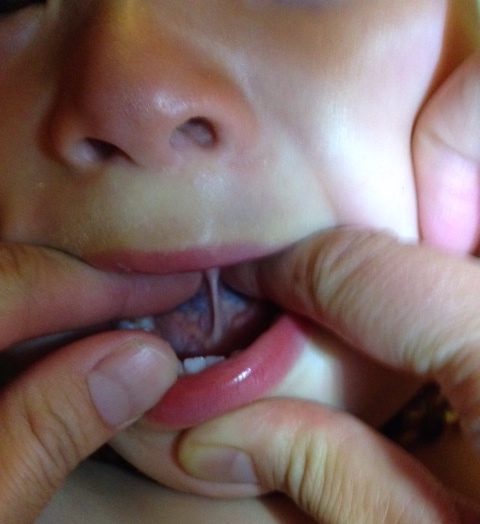
4 Main Take-Aways about Tethered Oral Tissue (TOTs)
Tethered oral tissue can restrict range of motion in the tongue, lips, and cheeks
All people have frenulums, but to have tethered oral tissue (TOTs) means that the frenulum is restricting range of motion and impacting function. Here is a handout that includes many of the symptoms that can be related to TOTs.
These TOTs do not stretch over time, but some children/adults learn to compensate despite the tightness. This is why some children and adults don’t show or feel that they have long-term complications.
Releasing restricted frenula can have a profoundly positive effect on both parent and baby and their ability to meet their breastfeeding goals, but is not always necessary.
International Board Certified Lactation Consultants (IBCLCs) identify tethered oral tissue at a higher rate than pediatricians/ENTs because they are the professionals completing full oral/feeding assessments.
IBCLC assessments are not 15 minute well-baby checks. They are extensive assessments, lasting 1-3 hours, using research-supported evaluation tools.
TOTs cannot be evaluated just by looking in the mouth or at a photo of the mouth, tongue, and lip. Function must be taken into account.
Parents should be walked through each part of the oral/feeding assessment so that they can make an informed decision about what is best for their child.
It is always necessary to go back to basics (positioning and latch) first, before blaming a tongue or lip tie. If the symptoms for the breastfeeding parent or baby are not relieved with the basics, then further assessment is necessary.
Parents should be presented with a menu of options: bodywork (CST/PT/OT/Chiro, etc); oral exercises; tummy time; supplementing; exclusive pumping, etc. - everyone deserves to be supported regardless of their decisions.
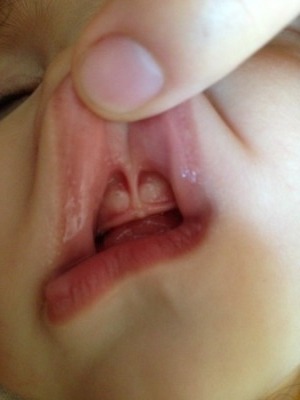
There has been an increase of identification of and recommendation to release tethered oral tissue in the past two decades, with good reason
Increased research and ultrasound investigation on how the tongue and lips function while feeding have shown what is necessary to achieve comfortable, effective breastfeeding and milk removal. This information was not available until the past two decades.
There has been a shift in the international culture to be more pro-breastfeeding than it was during the 1900s. It is unfortunate that some families feel ‘pressured to breastfeed’, as Rachel mentioned in the interview. Personally, I think this shift in societal views towards breastfeeding has more to do with current research identifying the vast health-promoting and immunological benefits to mom and baby when breastfeeding, rather than parents feeling pressured to breastfeed.
TOTs are nothing new. Tongue ties and frenotomy descriptions can be found in early Japanese writings, other historical documents, and even the bible. In the 1600s, frenotomy was widely known and there is documentation that describes that midwives would keep one fingernail long and sharp so that she could release the tight frenulum without the use of an instrument.
In the early 1900s, formula was advertised as better than breastmilk and breastfeeding was considered as something that only impoverished people do. Up until then, if a mother could not breastfeed her baby, the family hired a wet nurse or the baby would die due to lack of nourishment. Formula changed the way we looked at infant nutrition and breastfeeding, which meant tethered oral tissue wasn’t viewed as important to address. With this pendulum shift to positive views about breastfeeding, parents want answers when challenges arise. And many of these challenges can be attributed to TOTs.
There is a lack of evidence specifically studying the long term effects of tethered oral tissue (TOTs)
There are several case studies and randomized control studies on how frenotomies improve breastfeeding outcome.
There are some correlations between TOTs and challenges eating solid foods, speech and change in oral/dental structure, but there is only a small amount of research to back this up. We clearly need more research.
What we do know is that children with TOTs often mouth breathe, which is widely recognized as pathological and may lead to:
open-mouth posture, which can block the airway when sleeping, leading to bruxism, snoring, sleep apnea
impaired swallowing, which can lead to a palate that doesn’t naturally expand and Eustchian tubes not opening and equalizing pressure in the middle ear
So, what’s the overall take away message?
When a family has breastfeeding challenges and doesn’t receive a comprehensive oral/feeding assessment that evaluates tongue and lip function, then we run the risk of tongue/lip ties being overdiagnosed and overtreated.
For more information about tethered oral tissue, check out these resources:
Tongue-Tied by Richard Baxter, DMD, MS
Kellymom: Breastfeeding a Baby with a Tongue Tie or Lip Tie (Resources)
Tongue tie articles on SDBFC’s website

Breastfeeding After Exclusive Pumping
Breastfeeding isn’t always an easy journey. Breastfeeding after exclusive pumping is a journey of its own. Learn more in this reader’s inspiring story.
A few months ago, we sent out a Call for Breastfeeding Stories. Our desire was to flood the Internet with beautiful breastfeeding and pumping stories of triumph, overcoming challenges and struggles, and positive outcomes, regardless of the total amount of milk a mom was producing. We are thrilled to share these stories with you, our readers, and hope that they offer support and inspiration for you, wherever you are in your breastfeeding or pumping journey.
Thank you to all of the mothers who submitted their stories! If after you read these memoirs you are inspired to submit your story, feel free to send it to RobinKaplan@sdbfc.com.
This memoir is from Amanda, from https://exclusivepumping.com/

When I was pregnant with my second child, I was planning to breastfeed her. I was also really nervous about it because of my experience with my first child.
After my son was born, we struggled with nursing while we were in the hospital. Each nurse suggested that I hold him a different way, and it always worked when they were standing right there. However, after they left and I tried to nurse again on my own, I could never get him to latch. I remember being so sleep deprived from labor that I couldn't really listen to what they were telling me and have it sink in.
Additionally, the hospital had a lactation consultant, but there had a been a huge snowstorm a few days earlier, and she "hadn't been seen since the blizzard." So that form of assistance wasn't available, unfortunately.
(After my nurse told me that, I had this mental image of the lactation consultant getting lost on her way to the hospital in a sleigh or something. Hopefully, she eventually made it back.)
After three weeks of struggling and my son still not being back up to his birth weight, I ended up deciding to exclusively pump for him. I had a lot of complicated emotions around this - guilt for not trying harder to nurse, inadequacy for not being able to make nursing work, pride in myself for managing to breastfeed by pumping only. As a Type A person, I became pretty obsessed with it - how much I was pumping, how much he was eating, how much my stash was, etc. Exclusively pumping became such a big part of my identity as a new mom that I started an entire website about it.
So, when I was pregnant with my daughter, I wanted to make sure that she got breast milk, too, just like my son did. At the same time, I knew how hard it was to exclusively pump, and I was already terrified of having two kids under two years old. Exclusively pumping with a toddler and baby seemed impossible to me, and I wasn't sure if I could manage it again.
As soon as she was born, though, it was obvious that this baby had a completely different temperament than my son. While he had screamed for his entire first hour of life outside the womb, she just cried a little and then latched on like a champ.
There were definitely some bumps in the road over the first few days - again, I struggled a bit with latch in the hospital - but we moved past them pretty quickly, and she was back up to her birth weight after a little over week.

I have such great memories of nursing my daughter while on maternity leave. Some days (instead of going to Stroller Strides or trying to run errands) I would just decide to be lazy and spend the whole day on the couch with her - snuggling, switching to the other breast from time to time, and watching entire seasons of Game of Thrones.
I ended up nursing my daughter until she was 18 months old. I don't think I had much milk left at that point, and it was just part of her bedtime routine. When I ended up needing to go on a trip without her, my husband to put her to bed, and that was the end. I was sad to be done with nursing her, but it also felt like it was time.
Being able to nurse my daughter really helped me heal from the feelings of guilt and inadequacy I had felt after not being able to with my son. I'm so grateful for both breastfeeding relationships, though, because they taught me different things - my son taught me that I could figure things out as a mom even when things didn't go the way I'd planned, while my daughter taught me the importance of being in the moment and savoring time together.
Robin Wrote a Breastfeeding Book!
One thing that many people don’t know about me is that I have always had a passion for writing. Before becoming a lactation consultant, I wrote curriculum for local museums and websites and wrote two unpublished children’s books. So when I was approached to write this breastfeeding book I knew that there was no way I could pass up this amazing opportunity.
Supporting new families through their breastfeeding journeys has truly been my calling. I love my job and the adrenaline rush I feel when I have empowered a family and helped them to meet their breastfeeding goals. There is so much more to breastfeeding than just latching a baby to a breast. There are nuances, both simple and challenging, that help make this process enjoyable and seamless. We, as lactation consultants, have the honor to facilitate this breastfeeding process, when needed, and this book is just one step in that journey. Latch: A Handbook to Breastfeeding with Confidence at Every Stage provides families with the supportive and educational basics they need while breastfeeding their children, from pregnancy to weaning.
Over the next few weeks, I will be sharing some content you will find in Latch. This book is a great baby shower gift, for even the most seasoned-breastfeeding parent, as well as something you will want to buy even if you have already started breastfeeding. Latch is already available for presale on Amazon at: bit.ly/LatchBook and can be in your hands as early as March 13, 2018!
Thank you for following along and I look forward to sharing more details about Latch over the next few weeks!


Iron Rich Foods for Infants and Toddlers
One of the most important nutrients for older babies, especially breastfed babies, is iron. Learn more about the best iron-rich foods for infants and toddlers.
Rachel is a pediatric dietitian and mom to an infant and toddler. She is the instructor of the “Introduction to Solids” at the San Diego Breastfeeding Center. Join us for the next Introduction to Solids class on February 17th at 10:00am. More information and registration can be found here.
At your baby’s 4 or 6 month checkup, your doctor may discuss starting your baby on solid foods. It is an exciting time – up until this point your baby has been taking in all of his nutrition from breast milk or formula, and you get to shape his palate with new flavors and textures over the next 6 months and beyond. Your doctor may have talked to you about introducing iron rich foods early on. This is because iron stores in your baby typically start to become depleted around 6 months of age. I typically recommend families wait until 6 months of age to start solids (although I have heard pediatricians recommend between 4-6 months).

It is common to hear that infant fortified cereals are a good first food. Why? Infant cereals are typically fortified with iron and lots of other vitamins and minerals, which is why foods like rice cereal have historically been discussed as a good first food. BUT now we know that iron fortified cereals are not the only option, and many parents skip them altogether to start on solid foods. Another benefit of skipping these cereals is that early exposure to more tastes and flavors has been shown to increase baby’s interest in the tastes and textures of new foods in the future. Here are some great iron rich foods to offer right from the start:
Meats: meats can be a great food to introduce early on. Try stewing meats or using a slow cooker to allow for a softer texture. If you are introducing pureed foods, you may need to add a bit of water with meats to allow the food to blend or try blending with other great first foods like avocado and sweet potato. If you are using a baby led weaning approach, try soft meatballs with minced chicken or beef. Make chili and soup with chicken, beef, turkey and lamb.
Lentils and beans: I love these as dips, added to a sauce or as finger foods for a bit older baby. Beans and lentils are super easy to make. Mash on their own or add to a sauce. And if you take my introduction to solids class, I always bring in a sample that’s parent and baby approved, such as my green pea hummus or lentils - you can use these interchangeably as a puree for baby or a great dip for a slightly older toddler or an adult.
Greens: spinach, chard and kale are a few food sources of iron. Saute them with other vegetables or combine them in a puree with meats. As your baby learns to drink out of a straw or an open cup add greens to a fruit smoothie for some added nutrition.

Eggs: Eggs are a good source of iron. An egg scramble with veggies is a great way to get in some iron, and lots of vitamins and minerals.
Grains: Often overlooked, but some grains are high in iron. Some of my favorites include teff, amaranth, quinoa and millet. Make cereals with these grains, use in chili or stew, or make muffins or bread.
These are only a few great sources of iron. Although breastmilk is typically thought of as a poor iron source, the iron in breastmilk is absorbed very well by baby and is still an excellent source of iron for your growing child.
And one more tip – iron is better absorbed with a source of vitamin C. So for better absorption of iron pair an iron rich food with something like citrus fruits, berries, broccoli, apples or tomatoes. Also- breastmilk is an excellent source of vitamin C!
And remember that providing a balance of nutrients is important – iron is one of several important nutrients once baby starts solids.
Want to learn more? Join me at my upcoming Introduction to Solids class at The San Diego Breastfeeding Center on February 17th. Click here to register and for more information.
Breastfeeding Truly Takes a Village!
A few months ago, we sent out a Call for Breastfeeding Stories. Our desire was to flood the Internet with beautiful breastfeeding stories of triumph, overcoming challenges and struggles, and positive outcomes, regardless of the total amount of milk a mom was producing. We are thrilled to share these stories with you, our readers, and hope that they offer support and inspiration for you, wherever you are in your breastfeeding journey.
Thank you to all of the mothers who submitted their stories! If after you read these memoirs you are inspired to submit your story, feel free to send it to RobinKaplan@sdbfc.com.
A few months ago, we sent out a Call for Breastfeeding Stories. Our desire was to flood the Internet with beautiful breastfeeding stories of triumph, overcoming challenges and struggles, and positive outcomes, regardless of the total amount of milk a mom was producing. We are thrilled to share these stories with you, our readers, and hope that they offer support and inspiration for you, wherever you are in your breastfeeding journey.
Thank you to all of the mothers who submitted their stories! If after you read these memoirs you are inspired to submit your story, feel free to send it to RobinKaplan@sdbfc.com.
This Breastfeeding Memoir is from Natalie
Before my son was even born, I knew I wanted to breastfeed him. I attended multiple classes on breastfeeding, stocked up on nursing pads, nipple butter, and felt as prepared as I could be prior to his arrival. After a precipitous labor/delivery, he ended up being born in front of the hospital! One benefit was that I got to hold him immediately, so we had lots of skin to skin time which was emphasized in the classes. We tried breastfeeding within one hour of his birth, and he immediately latched! We had a lactation consultant visit at the hospital, and she said everything looked great! I even scheduled my first lactation appointment at SD Breastfeeding Center when my son was 4 days old. We weren't having issues, but I quickly learned that breastfeeding my son was way different than the practice doll we used in the class! During that visit, I learned my son had lip and tongue ties. Nobody else evaluated him for these, but being tongue tied myself it didn't come as much of a surprise. Fortunately, he was transferring well and the ties did not seem to be interfering with his feeding.
Fast forward 2 weeks, and my son was not at his birth weight. He was feeding for over an hour, falling asleep, and seemed very irritable and unhappy. As a new mom, I assumed this was normal. I pushed on for another week and then decided to schedule another visit with the LC for an evaluation. There, I did a weighted feed and learned that he wasn't transferring effectively. The LC explained how he was being restricted by his lip and tongue ties, and this could potentially decrease my supply. She recommended I consider a release of his ties, so I immediately called a provider and had them addressed the next day.
I read how many mothers noticed instant results and symptom relief post release. I didn't notice immediate results, but was confident that things would improve over the next few weeks. When they didn't, I followed up with Melanie, our LC. She assessed him and noticed that he still seemed restricted, wasn't transferring adequately, and recommended we take him for body work. Due to his poor weight gain (6 oz in 2 weeks) she taught me how to use my breast pump and implement an SNS (supplemental nursing system). She also recommended a galactagogue supplement. Things weren't moving in the direction I wanted, but I was committed to do everything I could to continue breastfeeding.
At this point, I was feeling very defeated and inadequate. I felt like I was doing everything I could, and was so sad that my little baby was not growing at the rate he should. My pregnancy and delivery were so natural and without issue that I naively thought breastfeeding would follow. I called my sister in law, who happens to be a breastfeeding mother. She immediately came over with galactagogue-rich foods and tea, and even pumped for my son while I built up my supply!
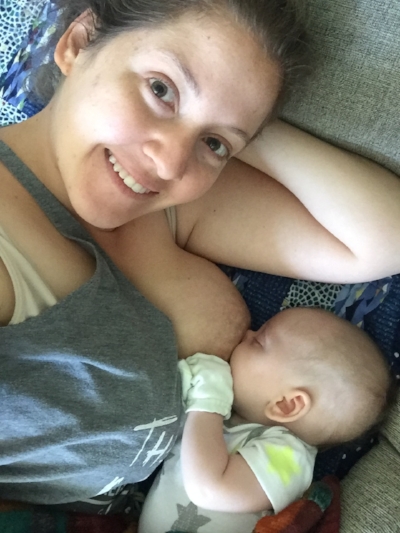
After additional LC visits, support groups, and the implementation of bodywork, I made the decision to have a second release for my son. Even though we are still post op and performing stretches, I already am seeing results. My son is happier, and I no longer have to use the SNS system. I have a nice freezer stash of my milk, and he is thriving with weight gain. He's not even three months old, so I don't know how this journey will end. I do know, however, that I'll do everything I can to preserve our nursing relationship. Without the help of multiple providers, I'm not sure where we would be. "It takes a village" is such an appropriate phrase for this season of my life. I am so thankful to live in a community that has SO much support for breastfeeding mothers.

